
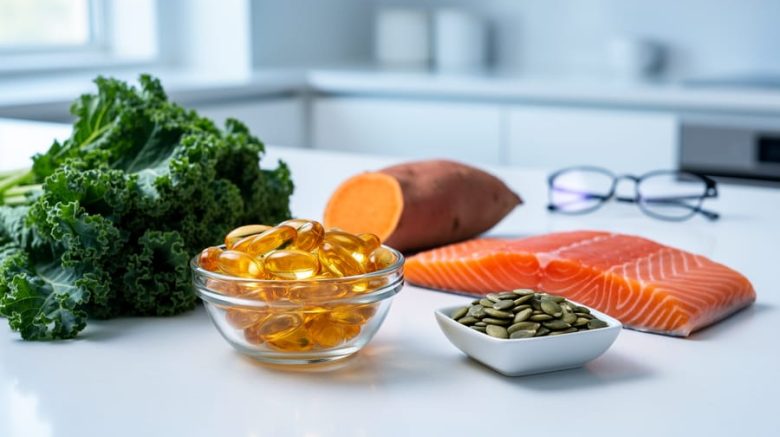
Consider stocking your medicine cabinet with natural health supplements that target specific eye structures and functions. Lutein and zeaxanthin protect your macula from harmful blue light, while omega-3 fatty acids support the tear film and retinal cell membranes. Vitamin A maintains your cornea’s clarity, and zinc helps your body absorb these nutrients effectively.
Your eyes face daily oxidative stress from screen exposure, UV radiation, and aging. This cellular damage accumulates over time, contributing to conditions like macular degeneration, cataracts, and dry eye syndrome. While a balanced diet provides some protection, many people don’t consume adequate amounts of eye-specific nutrients through food alone.
The supplement market offers hundreds of products claiming to preserve vision, but not all formulations are created equal. Some contain inadequate doses of active ingredients. Others combine nutrients that compete for absorption. Understanding which supplements have clinical backing, how they work in your body, and what dosages actually make a difference can mean the distinction between wasting money and genuinely supporting your vision.
This guide cuts through the marketing claims to examine evidence-based supplements for eye health. You’ll discover which nutrients have proven benefits, how to evaluate product quality, and what realistic outcomes you can expect. Whether you’re looking to prevent age-related decline or support existing eye conditions, the right supplementation strategy starts with accurate information.
Why Your Eyes Need More Than Just a Healthy Diet
You might believe that eating your vegetables and choosing nutritious meals will give your eyes everything they need. The reality is more complicated. Modern agricultural practices, food processing, and storage methods have significantly reduced the nutrient density of many foods compared to decades past. Even those who follow balanced diets may not get therapeutic levels of the specific compounds that support long-term eye health.
Your eyes have some of the highest metabolic demands of any tissue in your body. The retina, in particular, requires concentrated levels of certain antioxidants and nutrients that simply aren’t present in typical dietary amounts. Lutein and zeaxanthin, for example, accumulate in the macula at concentrations far exceeding what you’d find in your bloodstream. Achieving these protective levels through diet alone would require eating several cups of kale or spinach daily, a commitment few people can maintain.
Age changes the equation further. As we get older, our bodies become less efficient at absorbing and utilizing nutrients from food. The digestive system produces fewer enzymes, stomach acid decreases, and nutrient transport mechanisms slow down. This natural decline means that even an excellent diet may fall short of meeting your eyes’ nutritional requirements after age 50.
Environmental factors affecting vision have also intensified in recent years. Blue light exposure from digital screens, UV radiation, air pollution, and oxidative stress from daily life all increase the nutritional demands on your eyes. These modern stressors weren’t factored into traditional dietary recommendations.
The connection between overall health affects eyes means that chronic conditions like diabetes or cardiovascular disease can further compromise nutrient absorption and utilization. Certain medications also interfere with how your body processes eye-supporting vitamins and minerals.
Targeted supplementation bridges these gaps. It provides concentrated, bioavailable forms of nutrients specifically chosen to support eye tissues under stress, compensating for dietary limitations and meeting the heightened demands of aging and environmental exposure.
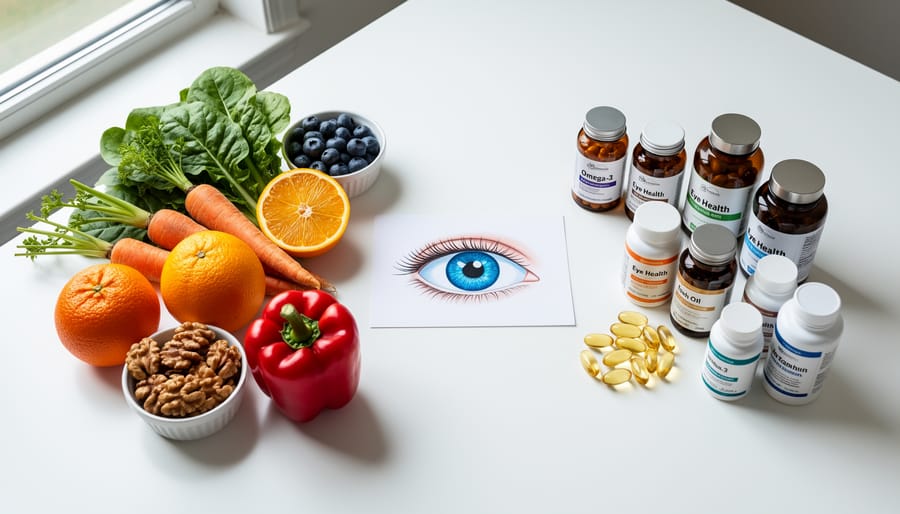

Essential Vitamins and Minerals That Protect Your Eyes
Vitamin A and Beta-Carotene: Your Night Vision Protectors
Vitamin A plays an essential role in maintaining healthy vision by supporting retinal function particularly the production of rhodopsin, a protein that allows your eyes to adjust in low-light conditions. Without adequate vitamin A, you may experience difficulty seeing at dusk or in dimly lit spaces, a condition known as night blindness.
Your body can obtain vitamin A directly from animal sources like liver, fish, and dairy products, or convert beta-carotene from plant foods such as sweet potatoes, carrots, and leafy greens. Beta-carotene offers a safer alternative since your body only converts what it needs, reducing the risk of toxicity.
The recommended dietary allowance is 900 micrograms for men and 700 micrograms for women. Children require less, depending on their age. Beyond night vision, vitamin A maintains the health of your cornea and protective eye tissues.
Expert advice: Excessive vitamin A from supplements can accumulate to toxic levels, so stick to recommended doses unless your doctor identifies a deficiency. Most people meet their needs through a balanced diet rich in colorful vegetables and fortified foods.
Lutein and Zeaxanthin: The Macular Defense System
Lutein and zeaxanthin are carotenoid pigments that concentrate in your macula, the central part of your retina responsible for sharp vision. Think of them as internal sunglasses. These compounds filter high-energy blue light before it reaches the delicate photoreceptor cells beneath, reducing oxidative stress that can damage these cells over time.
Research shows these carotenoids play a significant role in protecting against age-related macular degeneration (AMD). The landmark AREDS2 study found that 10 mg of lutein combined with 2 mg of zeaxanthin helped slow AMD progression in people at high risk. They work by neutralizing free radicals and strengthening the structural integrity of retinal tissue.
Your body can’t produce these nutrients, so you need them from outside sources. Dark leafy greens like kale and spinach provide the highest concentrations, along with corn, egg yolks, and orange peppers. Most eye health supplements combine lutein and zeaxanthin in the research-supported 5:1 ratio. Look for products that specify “free lutein” rather than lutein esters, as your body absorbs the free form more efficiently. Daily doses typically range from 6 to 20 mg of lutein.
Vitamin C and E: Antioxidant Powerhouses
Vitamins C and E work together as your eyes’ primary defense against oxidative stress, the cellular damage caused by unstable molecules called free radicals. This damage accumulates over time and contributes significantly to age-related eye conditions.
Vitamin C concentrates heavily in the eye’s aqueous humor (the fluid between your cornea and lens) where it neutralizes free radicals before they can harm delicate eye tissues. Research shows that people who maintain adequate vitamin C levels have a lower risk of developing cataracts. This water-soluble vitamin also strengthens blood vessels in your eyes, helping prevent the fragile vessel damage seen in diabetic retinopathy.
Vitamin E, a fat-soluble antioxidant, protects the fatty membranes of your eye cells from oxidative damage. The Age-Related Eye Disease Study found that combining vitamin E with other antioxidants reduced the progression of advanced macular degeneration by 25% in high-risk patients.
These vitamins function best as a team. Vitamin C actually helps regenerate vitamin E after it neutralizes free radicals, creating a continuous protective cycle. You’ll find vitamin C in citrus fruits, bell peppers, and strawberries, while vitamin E is abundant in nuts, seeds, and vegetable oils. For therapeutic doses, supplements typically provide 500mg of vitamin C and 400 IU of vitamin E, though you should always consult your eye doctor before starting any supplementation regimen.
Zinc: The Mineral Your Retina Can’t Function Without
Zinc plays a crucial role in transporting vitamin A from the liver to your retina, where it’s converted into melanin, a protective pigment. Without adequate zinc, this process breaks down, potentially affecting your night vision and overall retinal function.
Your retina contains one of the highest concentrations of zinc in your entire body. This mineral acts as a cofactor for over 300 enzymes involved in eye health, including those that protect against oxidative stress. Research shows that zinc deficiency can impair your eyes’ ability to adapt to darkness and may increase susceptibility to age-related eye conditions.
The Age-Related Eye Disease Study (AREDS) included 80 mg of zinc oxide in its formulation, though the updated AREDS2 study reduced this to 25 mg daily due to concerns about side effects at higher doses. Most experts now recommend the lower dose, which still provides significant benefits with fewer gastrointestinal issues.
You’ll find zinc paired with copper in quality eye supplements because high zinc intake can interfere with copper absorption. The standard ratio is 2 mg of copper for every 15 mg of zinc. Following AREDS formulation dosing guidelines ensures you’re getting these minerals in the right balance to support your retinal health safely.
Omega-3 Fatty Acids: Fighting Dry Eyes and Inflammation
Omega-3 fatty acids particularly DHA (docosahexaenoic acid) and EPA (eicosapentaenoic acid), play essential roles in maintaining healthy vision. DHA is highly concentrated in the retina, where it supports the structure of photoreceptor cells that detect light and enable you to see. Your body can’t produce these fatty acids efficiently on its own, making dietary intake crucial.
Research shows omega-3s improve tear production quality, helping combat dry eye syndrome. They reduce inflammation in the tear glands and along the ocular surface, addressing one of the root causes of discomfort. Studies have found that people who consume higher amounts of omega-3s experience fewer dry eye symptoms and better tear film stability.
You have two main supplement choices: fish oil and algae-based options. Fish oil typically provides both DHA and EPA, though quality varies between brands. Look for molecularly distilled products to minimize contaminants. Algae-based supplements offer a vegetarian alternative that’s environmentally sustainable and naturally free from ocean pollutants. They primarily contain DHA, which your body can partially convert to EPA.
Most eye health experts recommend 1,000-2,000mg of combined EPA and DHA daily. Consult your doctor before starting supplementation, especially if you take blood-thinning medications.
B Vitamins: Supporting Your Optic Nerve Health
B vitamins play a crucial role in protecting the delicate nerves that transmit visual information from your eyes to your brain. Three vitamins in particular deserve attention: B6 (pyridoxine), B9 (folate), and B12 (cobalamin). Together, these nutrients help reduce homocysteine, an amino acid that can damage blood vessels and nerves when levels climb too high.
High homocysteine is linked to increased risk of age-related macular degeneration and glaucoma. Research published in JAMA Ophthalmology found that women taking B6, B9, and B12 supplements reduced their AMD risk by 34% compared to those taking a placebo. The study tracked over 5,000 participants for seven years.
These vitamins also support the optic nerve directly by maintaining the protective myelin sheath around nerve fibers. For glaucoma patients, adequate B vitamin levels appear particularly important since this condition progressively damages the optic nerve.
You’ll find these nutrients in foods like leafy greens, legumes, eggs, and fortified cereals. However, certain groups struggle to absorb enough B12, including vegetarians, vegans, and adults over 50. If you fall into these categories, supplements containing 400 mcg of folate, 2 mg of B6, and 6 mcg of B12 provide a reasonable starting point. Always consult your eye care professional before adding new supplements to your routine.
What the Science Actually Says: AREDS and AREDS2 Studies
The Age-Related Eye Disease Study (AREDS) and its follow-up, AREDS2, represent the gold standard for understanding which supplements actually help protect vision. These large-scale clinical trials, funded by the National Eye Institute, enrolled thousands of participants and tracked them for years to determine if specific nutrient combinations could slow the progression of age-related macular degeneration (AMD) and cataracts.
The original AREDS study, completed in 2001, tested a combination of vitamin C (500 mg), vitamin E (400 IU), beta-carotene (15 mg), zinc (80 mg), and copper (2 mg). The results were striking: participants with intermediate AMD or advanced AMD in one eye reduced their risk of progression to advanced AMD by about 25% over five years. That translates to real vision preservation for people already showing signs of the disease.
However, the study also revealed a concerning finding. Beta-carotene increased lung cancer risk in current and former smokers. This prompted AREDS2, which replaced beta-carotene with lutein (10 mg) and zeaxanthin (2 mg), two carotenoids found naturally in the macula. The revised formula proved just as effective without the cancer risk, and researchers discovered that adding omega-3 fatty acids didn’t provide additional benefits beyond the core nutrients.
The studies showed no benefit for preventing AMD from developing in the first place or for slowing cataract progression. This distinction matters because many people mistakenly think these supplements work as general prevention for everyone. They don’t. The formulations specifically help people who already have moderate to advanced AMD.
Your eye doctor can assess your AMD stage through a dilated eye exam and imaging. If you fall into the intermediate or advanced category, an AREDS2-formula supplement represents one of the few proven interventions to protect your remaining vision. For everyone else, a balanced diet rich in colorful fruits and vegetables typically provides adequate eye-supporting nutrients without the need for high-dose supplementation.
Choosing the Right Supplement for Your Specific Needs
Selecting the right eye health supplement requires more than grabbing the first bottle you see at the pharmacy. Your age, current eye health, family history, and existing medical conditions all play a role in determining what will work best for you.
If you’re under 50 with no family history of eye disease, a standard multivitamin that includes eye-supporting nutrients may be sufficient. However, if you’re over 50 or have risk factors for age-related macular degeneration (such as smoking, light-colored eyes, or family history), you’ll likely benefit more from a targeted AREDS2 formula. These specialized supplements contain higher doses of specific nutrients proven to slow disease progression.
For those with dry eye syndrome, omega-3 supplements are often more effective than general eye formulas. People managing diabetes should look for supplements specifically designed to support retinal health, which typically include higher amounts of alpha-lipoic acid and lutein. If you’re dealing with cataracts or are at risk, formulas emphasizing vitamin C, vitamin E, and lutein deserve consideration.
Here’s the reality: generic multivitamins rarely contain therapeutic levels of eye-specific nutrients. A typical multivitamin might include 500 mcg of lutein, while research suggests 10 mg daily provides meaningful benefit. Similarly, the zinc levels in standard multivitamins fall short of what studies show protects against macular degeneration.
Before purchasing any supplement, check if you’re already getting adequate nutrition through your diet. Someone who regularly eats fatty fish, leafy greens, and colorful vegetables may not need the same supplementation as someone with a limited diet. Your healthcare provider can order blood tests to check for deficiencies in vitamin D, omega-3 fatty acids, and other nutrients.
Dosage matters too. More isn’t always better. Excessive vitamin A can be toxic, and too much zinc interferes with copper absorption. Look for supplements that follow AREDS2 guidelines if you have macular degeneration, or stick to established safe upper limits for individual nutrients.
Always consult your eye doctor or primary care physician before starting any new supplement regimen, especially if you take prescription medications. Some supplements interact with blood thinners, diabetes medications, or other common drugs. Your doctor can help you choose a formula that addresses your specific needs without creating new problems.
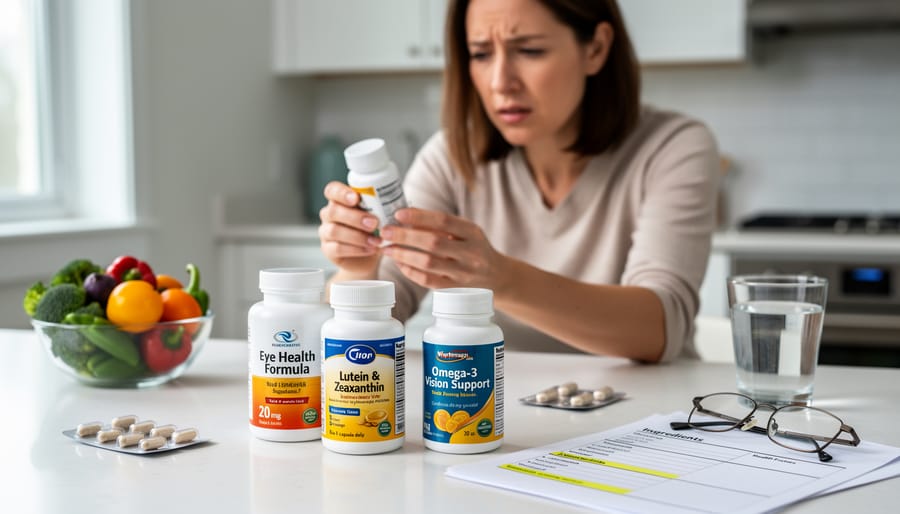
Safety Considerations and Potential Interactions
While natural supplements can support eye health, they’re not without risks. Understanding potential interactions and safety concerns helps you make informed decisions and avoid unintended harm.
The relationship between supplements and prescription medications deserves careful attention. Lutein and zeaxanthin can interact with cholesterol-lowering drugs, while high doses of vitamin C might reduce the effectiveness of certain chemotherapy treatments. If you’re on any medication, review your supplement plan with your healthcare provider before starting.
Dosage matters more than many people realize. Zinc provides significant benefits for macular health, but exceeding 40 mg daily can interfere with copper absorption and potentially weaken your immune system over time. Some studies suggest that excessive zinc intake may actually increase the risk of certain eye conditions rather than prevent them. Stick to recommended doses unless your doctor advises otherwise.
Vitamin A toxicity represents another concern, particularly if you’re taking both a multivitamin and a separate eye health formula. Symptoms of excess vitamin A include nausea, dizziness, and in severe cases, liver damage. Pregnant women need to be especially cautious, as high vitamin A levels can cause birth defects.
Some people experience mild side effects even at appropriate doses. Omega-3 supplements might cause fishy aftertaste, digestive upset, or slight blood thinning. Starting with lower doses and taking supplements with meals often minimizes these effects.
Quality control in the supplement industry varies widely. Choose products that have been third-party tested and display verification seals from organizations like USP or NSF International. This helps ensure you’re getting what the label promises without harmful contaminants.
Before adding any supplement to your routine, discuss your complete health picture with an eye care professional. They can evaluate your specific risk factors, current medications, and individual needs to create a safe, effective supplementation plan tailored to you.
When Supplements Aren’t Enough: Recognizing the Limits
While supplements offer valuable nutritional support for your eyes, they’re not a cure-all solution. Understanding their limitations helps you build a more effective approach to protecting your vision.
Supplements cannot reverse significant eye disease or replace professional medical treatment. If you’re experiencing vision changes, eye pain, or other symptoms, nutritional supplements alone won’t address the underlying problem. Conditions like glaucoma, cataracts requiring surgery, or retinal detachment need prompt medical intervention. Delaying proper treatment while relying solely on supplements can lead to permanent vision loss.
Think of supplements as one piece of a larger puzzle. They work best when combined with other protective measures. This means wearing UV-blocking sunglasses outdoors, maintaining a healthy diet rich in colorful vegetables and omega-3 fatty acids, managing chronic conditions like diabetes and high blood pressure, and avoiding smoking. No amount of lutein or zeaxanthin can compensate for years of smoking or uncontrolled blood sugar levels.
Regular eye exams remain the cornerstone of eye health. Many serious eye conditions develop gradually without obvious symptoms. A comprehensive eye exam can detect early warning signs that you might miss, allowing for timely intervention before significant damage occurs. Your eye care professional can also assess whether your current supplement regimen makes sense for your specific situation.
Some people have genetic or medical conditions that supplements simply cannot overcome. Others may have advanced disease that has progressed beyond the point where nutritional support provides meaningful benefit. Your optometrist or ophthalmologist can help you understand what’s realistic to expect based on your individual circumstances and guide you toward the most appropriate combination of prevention strategies and treatments.
Expert Recommendations for Getting Started
Starting an eye supplement regimen requires more than simply picking a bottle off the shelf. A thoughtful approach ensures you maximize benefits while avoiding potential complications. Begin by consulting your eye doctor or healthcare provider, especially if you have existing conditions or take other medications. They can identify specific nutritional gaps and recommend supplements tailored to your needs.
- Schedule a comprehensive eye exam to establish a baseline for your vision and eye health.
- Discuss your diet, lifestyle, and family history with your provider to determine which nutrients you might be lacking.
- Choose a high-quality supplement from a reputable manufacturer that has undergone third-party testing.
- Start with the recommended dosage on the label, and take your supplement with food containing healthy fats to improve absorption of fat-soluble vitamins like A and E.
- Set a consistent time each day to take your supplement, making it part of your routine like brushing your teeth.
- Store supplements in a cool, dry place away from direct sunlight, following package instructions carefully.
- Keep a simple log noting when you started and any changes you observe in your vision or eye comfort.
Track your progress through regular follow-ups with professional eye care. Schedule check-ups every six to twelve months to monitor whether the supplements are providing measurable benefits. Remember that improvements take time. Most studies showing positive effects of eye supplements involved consistent use over months or years, not weeks.
Be patient and realistic with your expectations. Supplements support eye health but aren’t miracle cures. If you experience any unusual symptoms like digestive upset, headaches, or vision changes after starting a new supplement, contact your healthcare provider promptly. Maintaining open communication with your medical team ensures your supplement routine remains safe and effective.
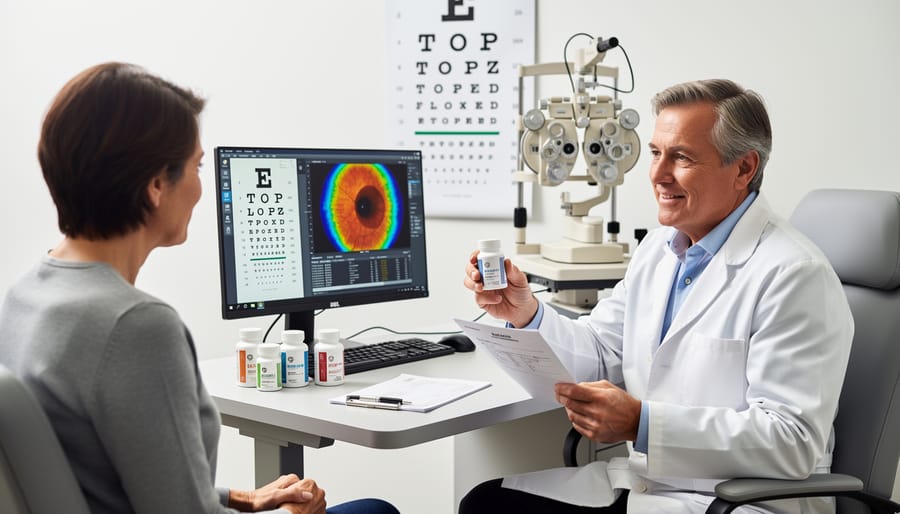
Natural supplements and multivitamins can play a meaningful role in protecting your vision and supporting long-term eye health, but they work best as part of a comprehensive approach to wellness. The evidence is clear: nutrients like lutein, zeaxanthin, omega-3 fatty acids, and vitamins C and E offer real benefits for many people, particularly those at risk for age-related eye conditions.
That said, supplements aren’t a magic solution. They can’t reverse existing damage or replace medical treatment when needed. What they can do is fill nutritional gaps in your diet and provide targeted support for specific eye health concerns.
The key is choosing quality products backed by research and using them appropriately. Not everyone needs the same supplements, and taking more doesn’t necessarily mean better results. Your age, diet, family history, and existing eye conditions all factor into what might benefit you most.
Before starting any new supplement regimen, talk with your eye care professional. They can help you understand which nutrients make sense for your situation and ensure supplements won’t interfere with medications you’re taking. Regular eye exams remain essential for monitoring your vision and catching problems early.
Remember that supplementation works best alongside other healthy habits. Eating a nutrient-rich diet, protecting your eyes from UV exposure, managing chronic conditions like diabetes, not smoking, and giving your eyes regular breaks from screen time all contribute to maintaining good vision throughout your life. Think of supplements as one tool in your eye health toolkit, not a substitute for overall wellness.