W Optical Reviews: What We Found Testing Popular Optical Products in 2026
Modern smart glasses and other eyewear components arranged on a clean optical lab workbench under soft natural light.

If you landed here looking for W Optical reviews, we need to be upfront: there’s no verified optical brand or retailer operating under that name in 2026. We’ve searched extensively through industry databases, optical retail directories, and licensing records, and no legitimate company called W Optical exists in the eyewear marketplace.
This matters because choosing the right eyewear provider affects both your vision correction outcomes and your budget. Rather than leave you empty-handed, we’ve put together evidence-based reviews of…

What Is Eye Nutrition (and How Does It Impact Your Vision)?

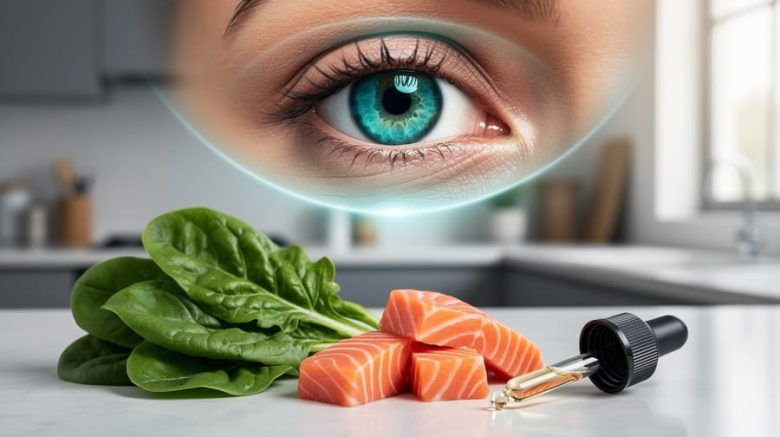
“Close-up of a healthy human eye with nutrient-rich leafy greens, omega-3 fish, and a dropper suggesting eye nutrition supporting vision.”

Eye nutrition refers to the specific vitamins, minerals, and antioxidants that protect vision and support the long-term health of your eyes. These nutrients work at the cellular level to shield against oxidative damage, maintain the integrity of eye tissues, and reduce the risk of age-related conditions like macular degeneration and cataracts.
Your eyes face constant oxidative stress from light exposure, environmental factors, and the metabolic demands of vision itself. Unlike many organs that can rely on general wellness habits alone, your eyes require a targeted mix of compounds that most people don’t get in adequate amounts…

10 Preventive Eye Care Steps to Protect Your Vision for Life

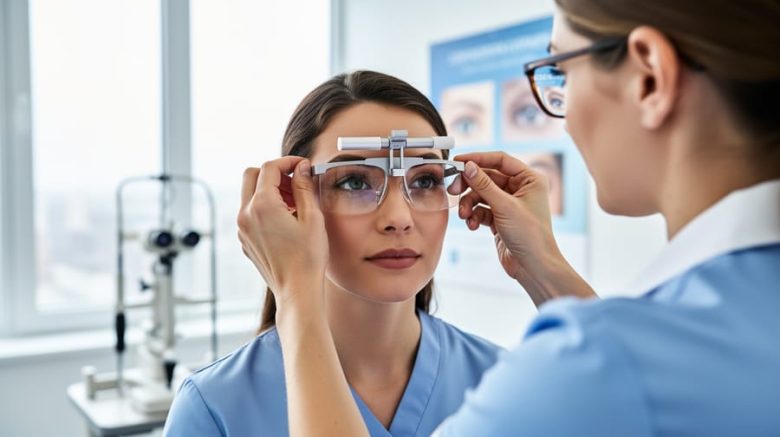
Patient wearing protective eye exam eyewear as a clinician adjusts the frame in a bright clinic.

Your vision depends less on luck and more on the choices you make every day. Most eye problems develop gradually and silently, but you can intercept many of them by building simple protective habits into your routine now. The ten strategies in this guide represent the most effective, evidence-based steps optometrists and ophthalmologists recommend for preserving your eyesight across your lifetime.
Many people wait until they notice blurred vision or eye discomfort before thinking about eye health. By then, subtle damage may already be underway. …

What Are Under Eye Conditions (and How Do They Develop)?

Close-up of a person gently touching the skin under their eye while looking at themselves in a mirror in soft daylight.

Under eye conditions are physical changes or abnormalities affecting the delicate skin and tissue beneath the eyes, ranging from common cosmetic concerns like dark circles and puffiness to medical issues such as infections, allergies, and structural problems. This area is particularly vulnerable because the skin here is thinner than anywhere else on the body, with fewer oil glands and less collagen support, making it susceptible to visible changes from aging, lifestyle factors, circulation issues, and underlying health conditions.
Most people will experience at least one under eye concern during their lifetime, whether temporary …

7 Common Eye Conditions in Elderly Adults You Should Know About

Elderly adult holding eyeglasses during an eye exam in a bright eye-care clinic, suggesting early detection of age-related vision conditions.

Vision changes affect nearly everyone over 60, and seven conditions account for most age-related eye problems: cataracts, age-related macular degeneration, glaucoma, diabetic retinopathy, dry eye syndrome, floaters and flashes, and presbyopia. Recognizing symptoms early and knowing when to seek care can preserve sight and quality of life.
If you’re caring for an aging parent or experiencing changes in your own vision, understanding these conditions empowers you to act quickly. Each of the seven conditions we’ll explore comes with distinct warning signs, from the cloudy vision of cataracts to the blind spots that signal …

Z Health Hand-Eye Coordination Chart: What It Is and How It Improves Visual Performance

Person holding a hand-eye coordination training chart at arm’s length while looking at it to practice smooth eye tracking.

The Z-Health hand eye coordination chart is a vision training tool that uses smooth pursuit eye movements across a grid of letters and numbers to improve how your eyes track moving targets and coordinate with physical movement. Developed as part of the Z-Health Performance Solutions system, this chart trains your visual system through structured tracking exercises that challenge both your eye muscles and the neural pathways connecting vision to motor control.
Unlike static vision charts you might encounter at a routine eye exam, this tool requires active movement. You hold the…

BPC-157 Peptide: Complete Description and Amino Acid Sequence Explained

Glowing segmented peptide chain representing BPC-157’s 15-amino-acid structure on a cool blue laboratory background

BPC-157 peptide consists of a specific 15-amino acid sequence: Gly-Glu-Pro-Pro-Pro-Gly-Lys-Pro-Ala-Asp-Asp-Ala-Gly-Leu-Val. This synthetic peptide, derived from a protective protein found naturally in human gastric juice, has attracted significant research attention for its regenerative properties and potential therapeutic applications across multiple tissue types, including ocular structures.
Understanding the precise molecular makeup of BPC-157 matters because its unique sequence determines how it interacts with cellular receptors and influences healing processes. Unlike many…

What Are Key Performance Indicators in Health Care? (Vision and Eye Health Edition)

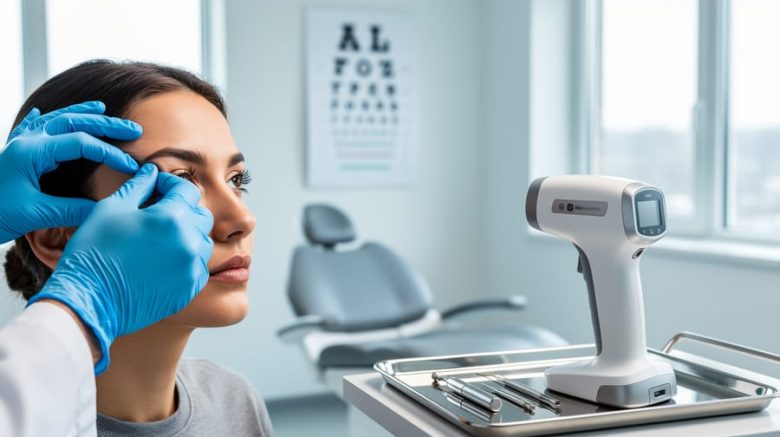
“Clinician’s gloved hands conducting an eye examination in a modern eye-care clinic with diagnostic equipment on a tray.”

Key performance indicators in health care are measurable values that track whether medical providers and facilities deliver safe, effective, and patient-centered care. In vision care specifically, these metrics help evaluate everything from surgical complication rates to screening compliance, giving patients a window into quality that goes beyond credentials alone.
Understanding these indicators empowers you to make informed decisions about where and from whom you receive eye care. While the structure of an animal eye diagram might illustrate …

What Is Vision Correction (and How Does It Work)?

Person’s hands adjusting clear eyeglasses with soft reflections, suggesting how vision correction helps focus light for clearer eyesight.

Vision correction is any method used to improve eyesight when the eye cannot focus light properly onto the retina. This includes glasses, contact lenses, laser surgery, and other medical procedures designed to sharpen blurred or distorted vision caused by refractive errors like nearsightedness, farsightedness, and astigmatism.
If you struggle to read road signs, find small print challenging, or notice images appearing fuzzy at certain distances, you’re experiencing the effects of a refractive error. The human eye works through precise coordination between the cornea and lens to bend incoming light and focus it on the retina. …

What Is an Animal Eye Diagram (and How Does It Work)?

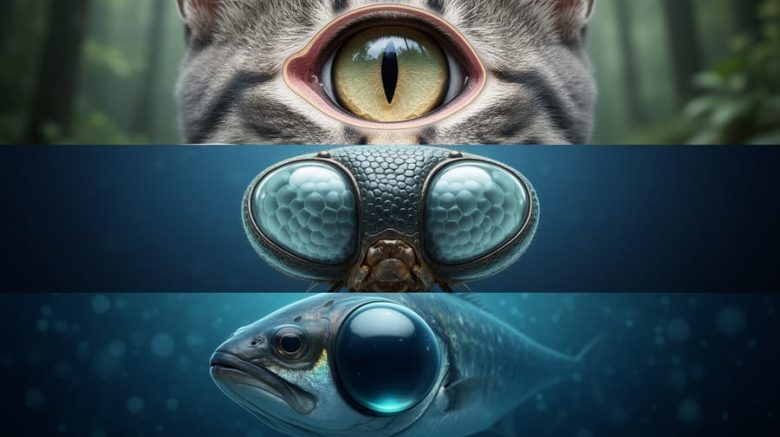
Label-free feature image showing detailed cross-section style layers of a cat eye, an insect compound eye, and a deep-sea fish eye to illustrate how animal vision structures differ across species.

An animal eye diagram is a labeled illustration that shows the anatomical structures of eyes across different species, revealing how vision works through the physical arrangement of parts like the cornea, lens, retina, and optic nerve. These visual tools help us understand not just what makes up an eye, but how different creatures have evolved remarkably varied solutions to the challenge of seeing their world.
Whether you’re studying the compound eyes of an insect, the reflective tapetum of a cat, or the massive spherical lens of a deep-sea fish, animal eye diagrams make complex biological systems easy to grasp. They break …