
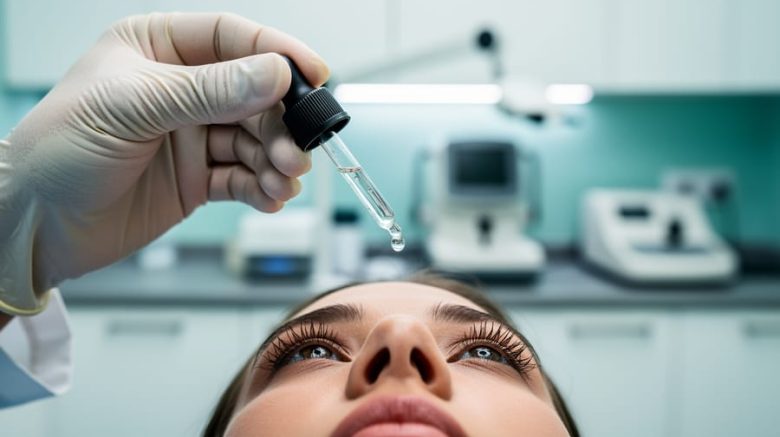
Lab research peptides for eye tissue, such as those from Researched Peptides are short chains of amino acids that scientists study in cells and animals to see whether they can protect, repair, or deliver treatment to parts of the eye. Almost all of this work is still early-stage, and none of it means you can or should try a peptide on your own eyes today.
That distinction matters. Researchers are exploring peptides for conditions like dry eye, corneal injury, retinal disease, and glaucoma, because these small molecules can be designed to do very specific jobs. But a promising result in a petri dish or a mouse is a long way from an approved treatment for people. Most ideas never make it that far.
Suppliers sell compounds labeled for laboratory use only, which is a very different thing from a medicine tested for human safety. Putting an unapproved product in or near your eyes carries real risks, including infection and permanent damage.
This guide explains what peptides are, how eye research actually moves from lab to clinic, which areas show the most activity, and how to read headlines with a clear head. If you’re a patient or caregiver, you’ll also find questions worth bringing to your eye doctor.
What Peptides Are and Why Researchers Study Them for the Eye
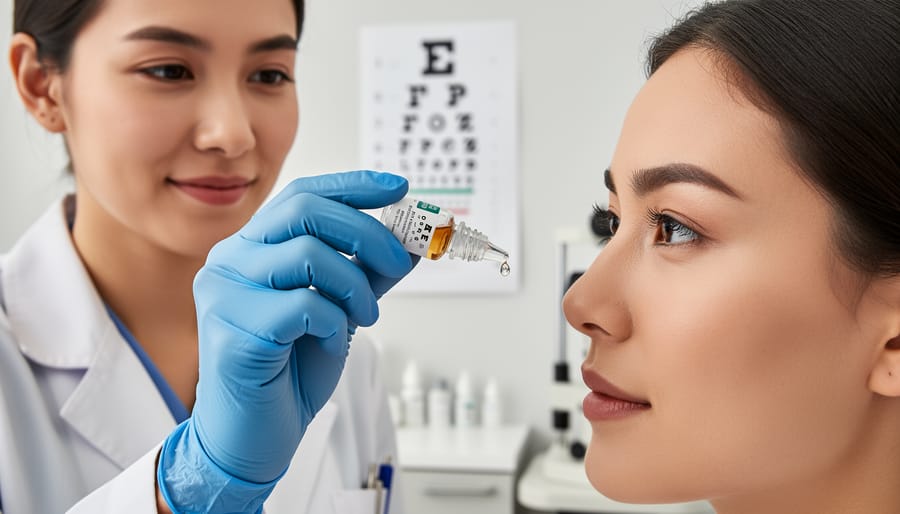
Peptides in Plain Terms
A peptide is a short chain of amino acids, the same building blocks that make up proteins. Think of amino acids as beads. A peptide is a short strand of them, while a protein is a very long, folded necklace, often with dozens or hundreds of beads twisted into a specific shape.
That difference in size matters. Because peptides are small, researchers can design them to do one fairly specific job, like nudging a cell to survive stress or calling off an inflammatory signal.
Peptides also differ from the small-molecule drugs found in many standard eye drops. Those are simpler chemicals, usually sturdier and easier to produce. Peptides tend to break down faster and need more careful handling.
Supplements are a different category altogether. They are sold as dietary products and are not tested or approved as eye treatments. A peptide studied in a lab is a research tool, not a supplement or a medicine.
Why the Eye Is a Special Case
The eye is a tricky place to test anything new, and that is exactly what makes it interesting to researchers. Its layout is the reason. The clear cornea and lens let scientists watch how tissue responds, but they also exist inside a protected structure. If you want a closer look at how all the parts fit together, our guide to eye anatomy is a good starting point.
That protection cuts both ways. Natural barriers keep harmful substances out, but they also block many compounds from reaching the tissue researchers care about, especially the retina at the back of the eye. Tears wash drops away within moments, too.
Healing is another hurdle. The cornea repairs itself fairly well, yet retinal and optic nerve cells largely do not regrow once damaged. So protecting them early matters.
Finally, the tissue is delicate and the doses are tiny. A compound must arrive in the right place, in the right amount, without irritating sensitive structures.
How Eye Peptide Research Moves From Dish to Patient
Cell and Tissue Models
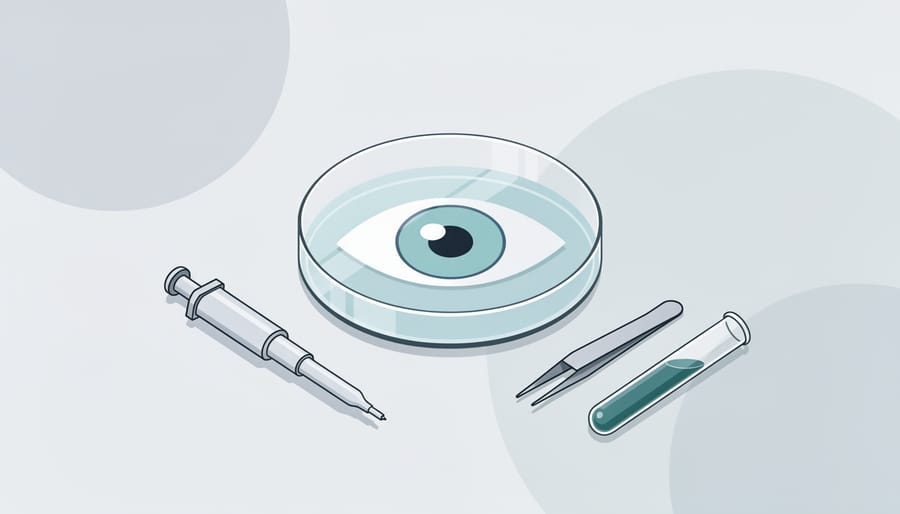
Most eye peptide research begins in a lab dish. Scientists grow eye cells, such as cells from the cornea or the light-sensing retina, and add a peptide to see what happens. Does the cell survive stress? Does inflammation settle down? Does a scratch in a layer of cells close faster?
Newer lab-grown tissue models go a step further. These are small, layered structures that mimic parts of the eye more closely than a single flat layer of cells does. Researchers can use them to watch how a peptide behaves in something closer to real tissue.
These models are fast, affordable, and carefully controlled, which makes them a good first filter. But they have clear limits. A dish has no blood flow, no immune system, and no tear film washing over the surface. A peptide that helps cells in a dish may do nothing in a living eye, so these results are only a starting point.
Animal Studies and Early Human Trials
Once a peptide looks promising in cells, researchers usually move to animal studies, most often in mice, rats, or rabbits. Animals offer something a petri dish can’t: a whole living eye, with blood flow, immune responses, and natural tear production. That lets scientists check whether a peptide reaches the tissue it’s meant for, whether it causes irritation or inflammation, and whether it changes how an injury or disease progresses.
There are real limits, though. Animal eyes differ from human eyes in size, structure, and healing speed, and diseases are often induced artificially rather than developing over decades, as they do in people. A strong result in a rabbit doesn’t promise the same result in a person.
Early human trials are small by design. Their main job is to answer a basic question: is this safe, and at what dose? Whether it works comes later, in larger studies that take years to complete.
Areas of Eye Health Where Peptide Research Is Active
Healing the Cornea and Eye Surface
The cornea is the clear front surface of the eye, and it’s a popular place to study peptides because injuries there can be watched closely. In cultured corneal cells, researchers test whether certain peptides help cells migrate across a scratched area and close the gap faster. Some animal studies have looked at similar effects in surface wounds, tracking how quickly tissue heals and how clear it stays afterward.
These are still early findings. A peptide that speeds healing in a dish or a lab animal may behave differently in a person, and results haven’t been confirmed in large human trials. For now, the best protection for your corneas is steady preventive eye care and prompt attention to any eye injury.
Protecting the Retina and Optic Nerve
Retinal cells and optic nerve fibers have a hard time recovering once they’re damaged, so researchers are asking whether peptides could help keep them alive in the first place. In lab dishes, some peptides have been tested for their ability to calm stress signals inside light-sensing cells. In animal models that mimic features of glaucoma or macular degeneration, other peptides have been studied for whether they slow the loss of nerve cells.
Results so far are early and mixed. A peptide that protects cells in a dish or a mouse eye may behave very differently in a person, and human data remain limited. For now, this is a direction of scientific inquiry, not a proven way to protect vision.
Inflammation, Dry Eye, and Infection
Some of the most interesting lab work looks at peptides that calm inflammation on the eye’s surface or fight microbes. Antimicrobial peptides, which are part of the body’s natural defenses, are being tested against bacteria and fungi in cell and animal models. Other peptides are studied for their ability to dial down the inflammatory signals linked to dry eye. Nearly all of this remains preclinical, and few candidates have reached even small human trials.
For now, proven options matter more. Lubricating drops, lid hygiene, and nutrition basics like omega-3 and eyes are where an eye care professional will usually start.
The Challenges Scientists Are Working to Solve

Getting a peptide to work in a dish is the easy part. Getting it to do something useful in a living eye is where most projects stall.
The first hurdle is stability. Peptides are fragile. The body is full of enzymes that chop them into pieces, and the eye is no exception. A peptide that looks promising in a lab can be broken down within minutes or hours, long before it has a chance to act.
The second hurdle is location. Many of the conditions researchers care about, such as retinal and optic nerve damage, involve tissue at the back of the eye. Eye drops mostly wash away or stay on the front surface, and the eye’s natural barriers are very good at keeping foreign substances out. Reaching the retina means getting past those defenses without harming them.
Then there’s duration. Even if a peptide arrives where it should, it may clear out quickly. Scientists want a dose to stay in place long enough to make a difference, ideally without needing frequent treatments.
Safety is the last piece, and it’s a big one. Eye tissue is delicate and has limited ability to repair itself. A compound that causes mild irritation elsewhere in the body could be a real problem here, so researchers test carefully for inflammation, toxicity, and unwanted effects on nearby cells.
To tackle these problems, researchers are exploring several delivery approaches:
– Specialized eye drops designed to hold onto the eye’s surface longer or carry a peptide through the outer layers
– Slow-release implants that would give off small amounts over time
– Injections placed close to the target tissue
Each approach has trade-offs, and most remain under investigation rather than ready for everyday use. Progress here is steady but gradual, which is why a promising lab result is only the first step.
Lab-Tested Is Not the Same as Safe: What Readers Should Know
Peptides that show promise in a lab are one thing. A product you can buy and put on your body is another. The gap between them is large, and it matters most when the product is meant for something as delicate as your eye.
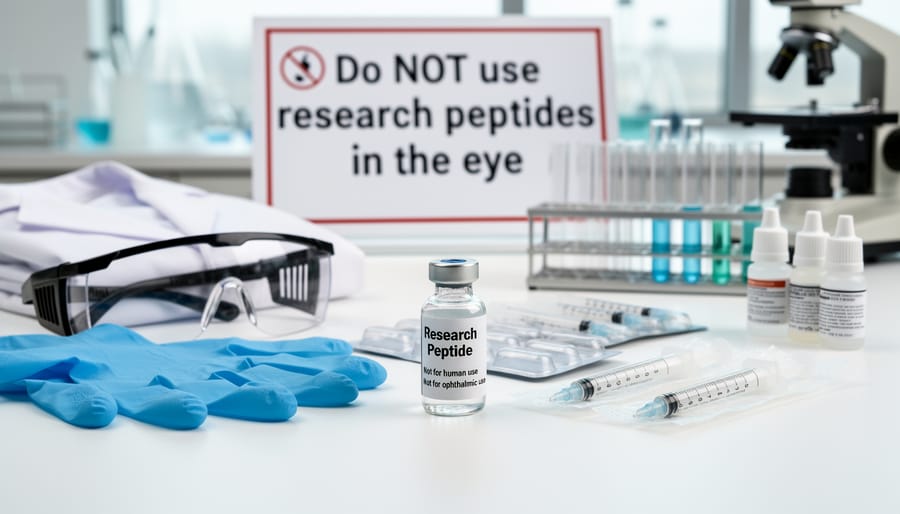
Compounds sold online as “research peptides” are made and labeled for laboratory use. They are not approved for use in people, and no regulator has reviewed them for safety or effectiveness in or around the eye. Eye drops and injections that go through approval are tested for sterility, correct strength, and safe ingredients. Research-grade products usually skip those checks. Purity and quality can vary from batch to batch, and what’s on the label may not match what’s in the vial.
That is a real concern for eye tissue. The surface of your eye is thin and sensitive, and the inside of the eye has few ways to clear out contaminants or irritants. A product that isn’t sterile, or contains unknown impurities, could cause irritation, infection, or damage that is hard to undo. Even a peptide that looks safe in a cell study can behave very differently once it’s in a living eye.
So please don’t apply, inject, or place any research peptide in or near your eyes unless a medical professional has told you to. This applies even if a website describes it as promising, natural, or “lab-tested.” Being tested in a lab is not the same as being proven safe for people.
If you’re curious about a new treatment you’ve read about, talk to an eye care professional first. They can explain what’s actually available, what’s still experimental, and what makes sense for your eyes. Careful habits matter in everyday eye care too, such as knowing what to avoid after dilation, and the same caution applies here. Stick with regulated, approved treatments, and bring questions to the people trained to answer them.
How to Read News About Eye Peptide Research
A headline that says “peptide restores vision” can mean very little or quite a lot, depending on who was studied. Start with the first question: was this work done in cells, animals, or people? A result in a lab dish is a first step. A result in mice is a step further. Only human trials tell you how something works in people.
Next, look at the sample size. A study of eight patients is a hint, not proof. Then check whether the findings were peer reviewed, meaning independent experts examined the methods before publication, and whether other research groups have repeated the result. One lab’s finding that nobody else has confirmed deserves caution.
Watch the language, too. Words like “cure,” “breakthrough,” or “reverses blindness” usually signal that a story is running ahead of the evidence. Careful reports say “may,” “early data suggest,” or “in animal models.” Those phrases are less exciting, but they are more honest.
Headlines about vision loss can be especially hard to read calmly, whether you are following research for yourself or a loved one. If you are wondering what it means to be legally blind or how a study might relate to your own condition, an eye care professional can help you sort out what applies and what doesn’t.
Saw a headline that confused you? Bring it to the EyeWise forums and ask. Our community can help you work through what a study actually found, and you can take your questions to your next appointment.
Common Questions About Peptides and Eye Research
Readers often write in with the same handful of questions about this topic, so here are straight answers.
Are peptides for the eye approved treatments?
Some peptide-based medicines exist in medicine broadly, but most peptides studied for eye tissue are still experimental. Compounds sold online as “research peptides” are not approved for use in or near the eyes.
Can peptides restore lost vision?
No peptide has been shown to reverse vision loss in people. Current lab work is mostly early-stage and focuses on protecting or repairing tissue, not bringing back sight that has already been lost.
How can I find out about eye clinical trials?
Ask your eye doctor first, since they know which trials fit your condition. You can also search public trial registries such as ClinicalTrials.gov, which lists studies, eligibility rules, and contact details.
When should I see an eye doctor instead of researching on my own?
Right away if you notice sudden vision changes, eye pain, redness that won’t clear, or flashes and floaters. Reading about research is a good way to prepare questions, but it should never replace an exam.
One more point worth keeping in mind: a promising headline is a reason to ask questions, not a reason to change your care. If something you read sparks your interest, write it down and bring it to your next appointment. Your eye care professional can tell you whether the study involved cells, animals, or people, and whether it has any bearing on your situation. If you’d like to compare notes with others who are following this research, the EyeWise forums are a friendly place to share what you’ve learned and ask what you’re still wondering about.
Lab research on peptides for eye tissue is genuinely promising, but it is still early. Most of what scientists have learned so far comes from cells, tissue models, and animals, and only a smaller number of studies have reached people. Real hurdles remain, especially getting a peptide to the right part of the eye, keeping it there long enough to work, and proving it is safe in such delicate tissue.
For you, the practical takeaway is simple. Treat headlines as a sign of where science is heading, not as a guide to what you should do today. If you’re managing an eye condition or simply curious, bring your questions to an eye care professional, who can explain what is approved, what is still experimental, and what fits your situation.
Keep learning at your own pace. EyeWise resources can help you understand new findings, and our forums are a good place to ask questions and hear from others.