What Are Key Performance Indicators in Health Care? (Vision and Eye Health Edition)
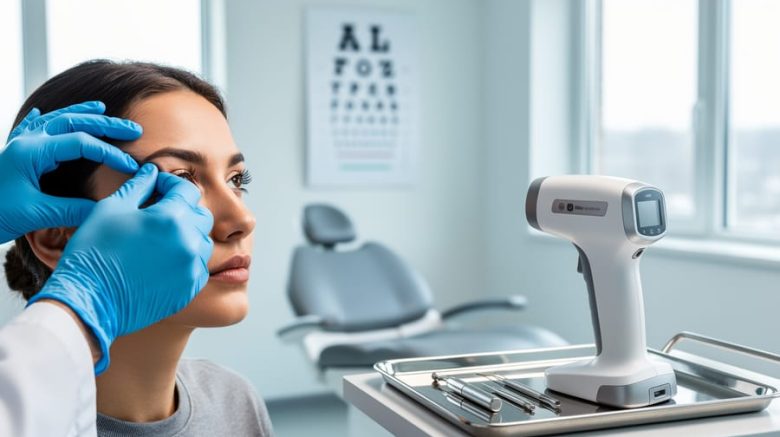
“Clinician’s gloved hands conducting an eye examination in a modern eye-care clinic with diagnostic equipment on a tray.”

Key performance indicators in health care are measurable values that track whether medical providers and facilities deliver safe, effective, and patient-centered care. In vision care specifically, these metrics help evaluate everything from surgical complication rates to screening compliance, giving patients a window into quality that goes beyond credentials alone.
Understanding these indicators empowers you to make informed decisions about where and from whom you receive eye care. While the structure of an animal eye diagram might illustrate …

What Is Vision Correction (and How Does It Work)?

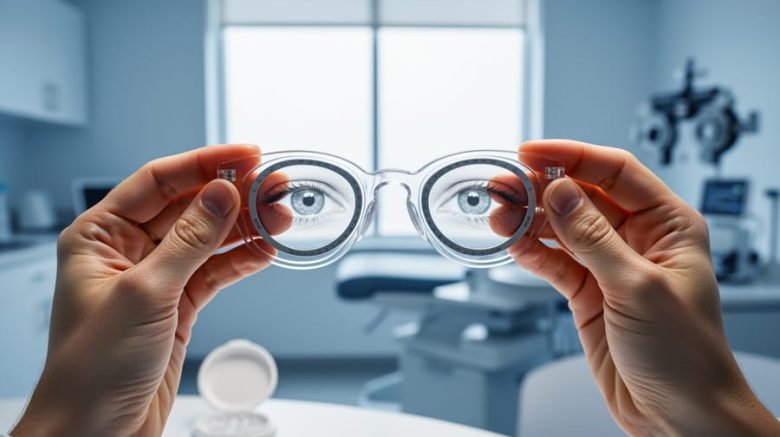
Person’s hands adjusting clear eyeglasses with soft reflections, suggesting how vision correction helps focus light for clearer eyesight.

Vision correction is any method used to improve eyesight when the eye cannot focus light properly onto the retina. This includes glasses, contact lenses, laser surgery, and other medical procedures designed to sharpen blurred or distorted vision caused by refractive errors like nearsightedness, farsightedness, and astigmatism.
If you struggle to read road signs, find small print challenging, or notice images appearing fuzzy at certain distances, you’re experiencing the effects of a refractive error. The human eye works through precise coordination between the cornea and lens to bend incoming light and focus it on the retina. …

What Is an Animal Eye Diagram (and How Does It Work)?

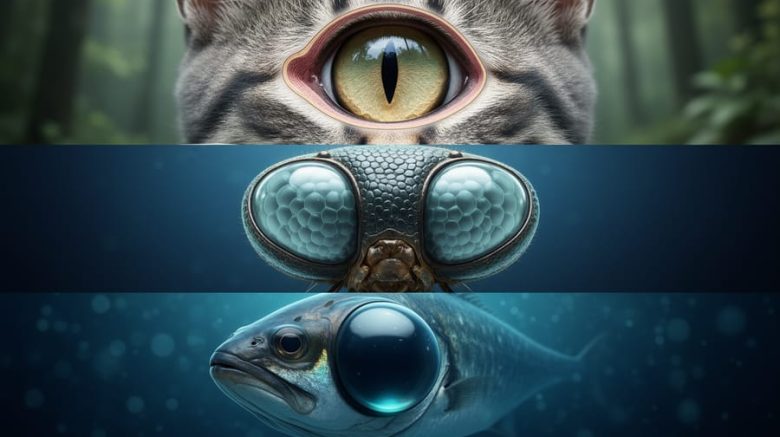
Label-free feature image showing detailed cross-section style layers of a cat eye, an insect compound eye, and a deep-sea fish eye to illustrate how animal vision structures differ across species.

An animal eye diagram is a labeled illustration that shows the anatomical structures of eyes across different species, revealing how vision works through the physical arrangement of parts like the cornea, lens, retina, and optic nerve. These visual tools help us understand not just what makes up an eye, but how different creatures have evolved remarkably varied solutions to the challenge of seeing their world.
Whether you’re studying the compound eyes of an insect, the reflective tapetum of a cat, or the massive spherical lens of a deep-sea fish, animal eye diagrams make complex biological systems easy to grasp. They break …