
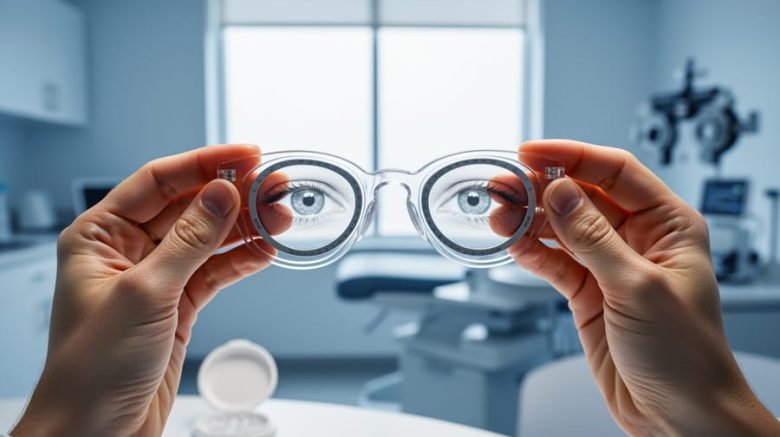
Vision correction is any method used to improve eyesight when the eye cannot focus light properly onto the retina. This includes glasses, contact lenses, laser surgery, and other medical procedures designed to sharpen blurred or distorted vision caused by refractive errors like nearsightedness, farsightedness, and astigmatism.
If you struggle to read road signs, find small print challenging, or notice images appearing fuzzy at certain distances, you’re experiencing the effects of a refractive error. The human eye works through precise coordination between the cornea and lens to bend incoming light and focus it on the retina. When this system is even slightly off, vision becomes unclear. Unlike the remarkable adaptations found in animal eye solutions across nature, human eyes often need external help to achieve optimal focus.
This article explains what vision correction actually does, how different methods work to restore clarity, and when you might need to consider your options. Understanding the fundamentals helps you make informed decisions about your eye health and recognize when it’s time to consult a professional.
Most people will need some form of vision correction at some point in their lives. Whether you’ve worn glasses since childhood or you’re noticing changes as you age, knowing how correction works removes the mystery and empowers you to take control of your visual health. We’ll walk through the science in straightforward terms, compare your correction choices, and clarify what each approach can and cannot do for your eyes.
What Vision Correction Means
Vision correction is a medical intervention that compensates for the eye’s inability to focus light accurately on the retina. When your eyes work perfectly, light rays entering through the cornea and lens converge precisely on the retina at the back of your eye, creating sharp images your brain interprets as clear vision. Vision correction steps in when this natural focusing system breaks down, using external or internal optical tools to redirect light rays onto the correct focal point.
The need for correction arises from refractive errors, which are imperfections in how your eye bends incoming light. These errors stem from variations in eye shape, corneal curvature, or lens flexibility. When the eyeball is too long or too short, or when the cornea’s curve is uneven, light focusing on the retina shifts off-target, producing blurred or distorted vision. Vision correction adjusts the light’s path before it reaches the retina, restoring clarity.
Four primary refractive errors drive most vision correction needs:
- Nearsightedness (Myopia)
- Light focuses in front of the retina rather than on it, making distant objects appear blurry while close-up vision remains clear. The eyeball is typically too long from front to back.
- Farsightedness (Hyperopia)
- Light converges behind the retina, causing nearby objects to blur while distance vision may stay sharp. The eyeball is usually too short or the cornea too flat.
- Astigmatism
- An irregularly shaped cornea or lens creates multiple focal points instead of one, distorting vision at all distances. Light scatters unevenly across the retina.
- Presbyopia
- Age-related loss of lens flexibility reduces the eye’s ability to focus on close objects. Nearly everyone experiences this after age 40 as the lens hardens naturally.
- Refractive Error
- Any optical imperfection that prevents light from focusing correctly on the retina, measured in diopters to indicate correction strength needed.
Vision correction’s singular goal is practical: restore functional sight by compensating for these optical misalignments, whether through lenses that pre-bend light rays, surgical reshaping of the cornea, or replacement of the eye’s natural lens.
How Vision Correction Works
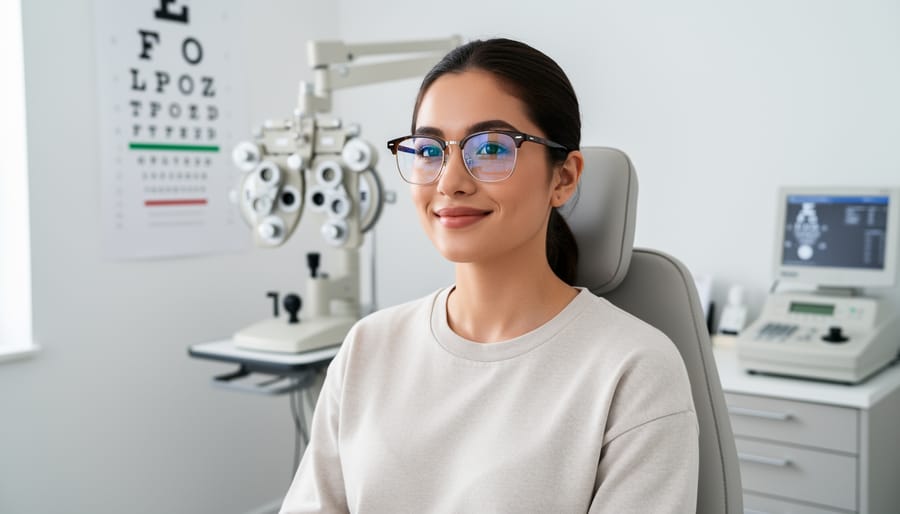
Vision correction works by adjusting how light enters your eye so it focuses precisely on the retina, the light-sensitive tissue at the back of your eyeball. When you have a refractive error, light rays don’t converge at the correct point, creating blurred or distorted images. Think of it like a camera that’s slightly out of focus, vision correction fine-tunes the optics to bring everything into sharp clarity.
To understand how eyes focus picture light traveling through the cornea (your eye’s clear front window) and the lens inside your eye. These structures bend incoming light rays, ideally directing them to meet at a single point on the retina. When this process works correctly, your brain receives clear visual signals. When it doesn’t, you need correction.
Different correction methods tackle this challenge in distinct ways. Eyeglasses and contact lenses place an additional lens in the light’s path before it reaches your cornea, pre-bending the rays to compensate for your eye’s focusing error. If you’re nearsighted, for instance, your eye bends light too much, so corrective lenses diverge the rays slightly before they enter. For farsightedness, lenses converge the light more strongly.
Surgical approaches take a more permanent route by physically reshaping the cornea itself. Procedures like LASIK remove microscopic amounts of corneal tissue to change its curvature, altering how powerfully it bends light. It’s similar to grinding a camera lens to a different specification, you’re modifying the optical element rather than adding an external filter.
For more complex vision issues or age-related changes, lens replacement surgery swaps your eye’s natural lens for an artificial one with the correct focusing power. This approach, often used when the natural lens has become cloudy (cataract) or can no longer adjust focus (presbyopia), installs new optics directly inside your eye. The eye diagram explained in detail shows where each component sits and how these interventions work at different points in your visual system.
Common Vision Correction Methods
Eyeglasses
Eyeglasses correct vision by placing precisely shaped lenses in front of your eyes, bending light with lenses before it reaches your cornea. This external adjustment redirects incoming light rays so they focus sharply on your retina, compensating for your eye’s natural focusing errors. The process is entirely non-invasive, you simply put them on, and your vision clears.
Prescription lenses come in three main configurations. Single vision lenses correct one field of vision, either distance or near, making them ideal for straightforward nearsightedness, farsightedness, or astigmatism. Bifocals feature two distinct zones: an upper section for distance and a lower segment for reading, with a visible line separating them. Progressive lenses eliminate that line by gradually transitioning between distance, intermediate, and near vision zones, providing a more natural visual experience across all ranges.
Lens materials have evolved considerably. Traditional glass offers excellent optical clarity but adds weight and breaks easily. Polycarbonate lenses resist impact, making them safer for children and active adults, though they scratch more readily without protective coatings. High-index plastic lenses reduce thickness for strong prescriptions, while trivex combines impact resistance with optical quality.
Eyeglasses suit nearly everyone. You can remove them anytime, switch between multiple pairs for different tasks, and adjust your prescription as your vision changes. They require no contact with your eye surface, carry minimal health risks, and accommodate virtually any refractive error severity. This versatility explains why glasses remain the most widely chosen correction method.
Contact Lenses
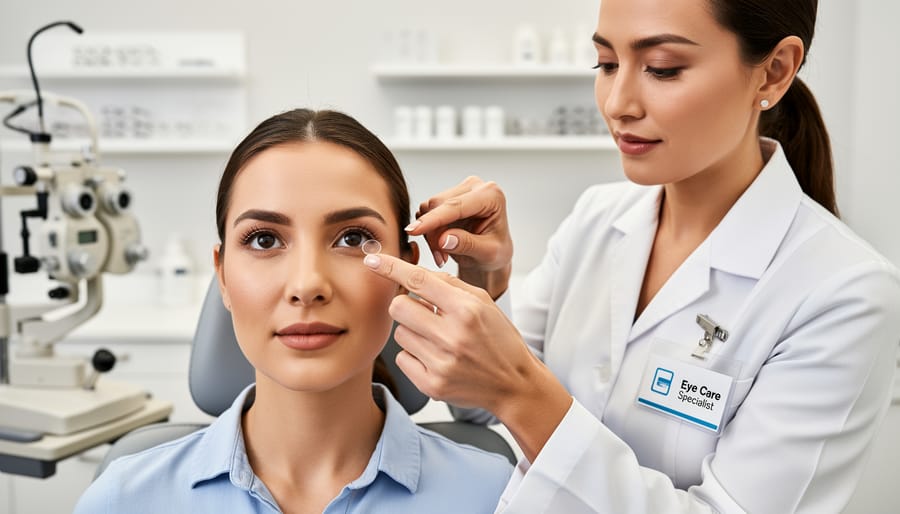
Contact lenses are thin, corrective lenses placed directly on the eye’s surface to bend light and correct refractive errors. Unlike eyeglasses, they move with your eye and provide a wider field of clear vision without frames.
The two main lens materials differ significantly. Soft contact lenses, made from flexible, water-containing plastics, conform to the eye’s shape and feel comfortable almost immediately. They’re the most popular choice for first-time wearers. Rigid gas permeable (RGP) lenses are firmer and more durable. They allow more oxygen to reach the cornea and often deliver sharper vision, particularly for astigmatism or irregular corneas, though they require a longer adjustment period.
Wearing schedules vary based on lens design and your needs. Daily disposables are worn once and discarded, eliminating cleaning routines and reducing infection risk. Extended wear lenses can be worn for several days or weeks continuously, though this isn’t suitable for everyone. Monthly or bi-weekly lenses require nightly removal and proper care.
Specialized designs address specific vision problems. Toric lenses have different powers in different meridians to correct astigmatism’s uneven corneal curvature. Multifocal contacts incorporate multiple prescription zones to help presbyopic eyes focus at varying distances, reducing dependence on reading glasses.
Beyond vision correction, contacts offer practical advantages. They don’t fog up, slip during physical activity, or obstruct peripheral vision. Many people also appreciate the cosmetic benefit of seeing their face without frames.
Refractive Surgery
Refractive surgery offers permanent solutions by physically altering how your eye bends light. Unlike glasses or contacts that sit outside or on the eye, these procedures reshape the cornea itself or replace the natural lens inside the eye.
LASIK (Laser-Assisted In Situ Keratomileusis) remains the most widely performed procedure. A surgeon creates a thin corneal flap, uses a laser to remove precise amounts of tissue underneath, then repositions the flap. The reshaped cornea bends light more accurately onto the retina. PRK (Photorefractive Keratectomy) achieves similar results without creating a flap, the laser directly reshapes the corneal surface after removing the outer epithelial layer. Recovery takes longer with PRK, but it suits people with thinner corneas.
SMILE (Small Incision Lenticule Extraction) represents a newer approach. The surgeon uses a femtosecond laser to create a small lens-shaped piece of tissue inside the cornea, then removes it through a tiny incision. This minimally invasive technique preserves more corneal structure.
For severe refractive errors or age-related lens changes, surgeons may replace the eye’s natural lens with an artificial intraocular lens. This mirrors cataract surgery but serves a corrective purpose.
These are medical procedures with real risks and benefits. Not everyone qualifies, corneal thickness, prescription stability, overall eye health, and other factors determine candidacy. A comprehensive evaluation by an ophthalmologist or optometrist is essential before pursuing any surgical option. They’ll assess whether your eyes are suitable and which procedure aligns with your specific vision needs.
Orthokeratology
Orthokeratology, commonly called ortho-k, offers a unique approach: you wear specially designed rigid gas permeable contact lenses while you sleep, and they gently reshape your cornea overnight. When you remove the lenses in the morning, your cornea holds its new shape temporarily, giving you clear vision throughout the day without needing glasses or contacts.
The reshaping effect is reversible. If you stop wearing the lenses at night, your cornea gradually returns to its original shape over several days or weeks, and your vision reverts to what it was before treatment. This makes ortho-k appealing for people who want daytime freedom from corrective lenses but aren’t ready for permanent surgical options.
Ortho-k works best for mild to moderate nearsightedness, though some designs can address astigmatism. It’s particularly popular among children and teens, since their eyes are still changing and parents often prefer non-surgical correction. Athletes and people in dusty or dry work environments also choose ortho-k to avoid the challenges of wearing lenses during the day.
The process requires careful fitting by an eye care professional trained in orthokeratology, along with regular follow-up visits to monitor corneal health and reshaping progress.
When Vision Correction Is Used

Vision correction addresses diverse needs throughout daily life and across all age groups. Many adults use correction for tasks requiring sharp focus at various distances, reading labels, viewing road signs, using digital screens, or enjoying hobbies. Children may need correction to support learning and development, as clear vision is essential for reading, classroom participation, and safe play.
As people age, nearly everyone experiences presbyopia, the natural loss of near focusing ability that typically emerges around age 40. This prompts many to adopt reading glasses, bifocals, or progressive lenses for the first time. Meanwhile, some individuals manage more complex conditions like keratoconus (progressive corneal thinning) or high astigmatism, where specialized correction options such as rigid gas permeable lenses or customized surgical procedures become valuable tools.
Common scenarios where vision correction proves useful include:
- Reading books, labels, and close work requiring detail
- Driving and viewing distant objects clearly
- Computer use and reducing digital eye strain
- Sports and active lifestyles where precision matters
- Professional requirements for pilots, surgeons, and similar fields
- Cosmetic preferences and personal comfort
Vision correction ultimately serves quality of life. Whether it’s a student seeing the board from the back row, a professional meeting occupational standards, or a retiree continuing to read independently, the right correction option restores functional vision for meaningful activities. Just as nature has developed varied vision types across species, humans benefit from multiple correction approaches tailored to individual circumstances, eye anatomy, and lifestyle demands.
Choosing the Right Vision Correction Option
Selecting the right vision correction approach depends on several personal factors working together. Your lifestyle plays a central role: athletes or active individuals might prefer contact lenses or refractive surgery for freedom of movement, while someone who works long hours at a computer may find eyeglasses more comfortable. Prescription strength matters too, people with mild refractive errors have more options, whereas high prescriptions or complex astigmatism may limit certain choices.
Your eye health status is equally important. Conditions like dry eye syndrome, thin corneas, or keratoconus can rule out specific procedures or lens types. Age influences correction needs as well: children typically start with eyeglasses, adults in their 40s often face presbyopia requiring multifocal solutions, and older adults may consider surgical options after cataracts develop.
Budget considerations are practical realities. Eyeglasses involve upfront costs plus periodic replacements, contact lenses require ongoing purchases, and surgery demands significant initial investment despite long-term savings. Personal preferences, such as comfort with eye drops, tolerance for surgical procedures, or cosmetic concerns, also shape your decision.
No single method works best for everyone. A comprehensive eye examination with your eye care provider is essential to assess your specific situation, including how well light achieves retina focus with different correction approaches. Your provider can explain which options suit your unique combination of needs, help you weigh trade-offs, and create a personalized correction plan that fits your life.
Frequently Asked Questions
Does vision correction permanently fix refractive errors?
Only refractive surgery can create a lasting change to your eye’s focusing power by reshaping the cornea or replacing the natural lens. Eyeglasses, contact lenses, and orthokeratology provide clear vision while you’re using them, but the underlying refractive error remains unchanged.
Is one correction method safer than the others?
Each method carries different considerations rather than a simple “safest” ranking. Eyeglasses pose virtually no risk to eye health, while contact lenses require proper hygiene to prevent infections, and surgery involves typical procedural risks that your surgeon will discuss during consultation.
How often should I update my prescription?
Adults with stable vision typically need eye exams every one to two years, though your prescription may not change at each visit. Children, older adults, and anyone noticing vision changes should have more frequent checkups, as your eye care provider will recommend based on your individual needs.
Can I switch between different correction methods?
Yes, many people alternate between methods or transition from one to another over time. You might wear contacts during the week and glasses on weekends, or switch from glasses to surgery when your lifestyle changes, as long as your eye health supports the options you’re considering.
What if correction doesn’t give me perfect 20/20 vision?
Not everyone achieves 20/20 vision with correction, especially if other eye conditions affect visual clarity beyond refractive error. The goal is your best corrected vision, which means the clearest sight possible given your eye’s unique characteristics, and for most people that’s sufficient for all daily activities.
Will my refractive error get worse if I don’t wear correction?
Skipping your glasses or contacts won’t make your underlying refractive error progress faster. However, uncorrected vision can cause eye strain, headaches, and difficulty with tasks requiring clear sight, so wearing your prescribed correction improves comfort and function even though it doesn’t slow the condition itself.
These questions reflect what most people wonder when they’re weighing their options or starting treatment. Understanding that correction addresses symptoms rather than curing refractive errors helps set realistic expectations. Your eye care provider can answer questions specific to your prescription, eye health, and lifestyle to guide you toward the approach that fits best.
Vision correction offers a range of proven methods to address refractive errors and help you see clearly. Whether through eyeglasses, contact lenses, refractive surgery, or orthokeratology, each approach works by ensuring light focuses correctly on your retina. The best choice depends on your unique prescription, lifestyle, eye health, and personal preferences.
Understanding how these options work puts you in a stronger position to have meaningful conversations with your eye care provider. You can weigh the trade-offs, ask informed questions, and choose a correction method that fits your daily life and long-term vision goals.
Regular eye exams remain essential. Your vision and eye health change over time, and staying current with professional care ensures your correction remains effective and your eyes stay healthy. If you haven’t had an exam recently, or if your current correction feels less than optimal, schedule an appointment. Exploring the full range of options with a qualified professional opens the door to clearer, more comfortable vision tailored to your needs.