
Key performance indicators in health care are measurable values that track whether medical providers and facilities deliver safe, effective, and patient-centered care. In vision care specifically, these metrics help evaluate everything from surgical complication rates to screening compliance, giving patients a window into quality that goes beyond credentials alone.
Understanding these indicators empowers you to make informed decisions about where and from whom you receive eye care. While the structure of an animal eye diagram might illustrate biological function, KPIs reveal how well your provider applies clinical knowledge to preserve and improve your vision. The difference matters. A practice with strong performance metrics demonstrates consistent quality across patient outcomes, safety protocols, and preventive care delivery.
This guide breaks down how KPIs function in vision care settings, which specific indicators matter most for evaluating eye health providers, and how to interpret these metrics when choosing where to receive treatment. You’ll learn which measurements reflect high-quality cataract surgery programs, what screening compliance tells you about a practice’s commitment to preventive care, and which safety benchmarks separate exceptional providers from average ones.
The metrics discussed here apply across optometry and ophthalmology practices, from routine vision exams to specialized surgical care. Whether you’re selecting a provider for the first time or evaluating your current eye care team, knowing which performance indicators to ask about puts you in control of your vision health decisions.
What Key Performance Indicators Mean in Eye Care
Key performance indicators in eye care are measurable values that clinics, hospitals, and individual providers use to evaluate how well they’re delivering vision services and helping patients maintain or improve their sight. These metrics create a framework for tracking quality, identifying areas that need attention, and making evidence-based improvements to patient care.
Think of KPIs as a report card for eye care delivery. Just as students receive grades in different subjects, eye care facilities track performance across multiple dimensions of care. Some indicators measure what happens to patients, whether their vision improves, whether complications occur, whether their conditions stabilize. Others measure how care is delivered, appointment wait times, screening completion rates, follow-up adherence.
The distinction between clinical and operational KPIs matters because excellence requires both dimensions. Clinical KPIs focus on patient health outcomes: visual acuity after cataract removal, pressure control in glaucoma patients, vision preservation in those with macular degeneration. These indicators tell you whether treatments are achieving their intended medical goals.
Operational KPIs measure service delivery and process efficiency: how many eligible diabetes patients receive annual retinopathy screenings, how quickly urgent cases get appointments, whether patients return for recommended follow-ups. Strong operational performance often supports better clinical results, since timely screening and consistent follow-through help prevent vision loss.
- Clinical KPI
- A measurable value tracking patient health outcomes, such as vision improvement or complication rates. Clinical KPIs answer whether medical interventions are achieving their therapeutic goals.
- Operational KPI
- A metric measuring how efficiently care is delivered, including access, timeliness, and process completion. These indicators reflect the systems and workflows that support patient care.
- Quality Measure
- A standardized metric used to assess healthcare performance across facilities or providers. Quality measures allow for comparison and benchmarking within the field.
- Outcome Indicator
- A KPI that tracks the end results of care, such as functional vision or disease control. Outcome indicators show what patients ultimately experience from their treatment.
- Process Indicator
- A measure of whether recommended care steps were completed, such as screening rates or medication adherence. Process indicators track actions that typically lead to better outcomes.
Together, these categories of indicators help eye care providers assess their performance from multiple angles. A facility might excel at scheduling efficiency but identify opportunities to improve surgical outcomes, or vice versa. The goal is using these measurements to create a continuous cycle of evaluation and improvement, ensuring patients receive both timely access and effective treatment.
How Vision Health Indicators Work in Practice
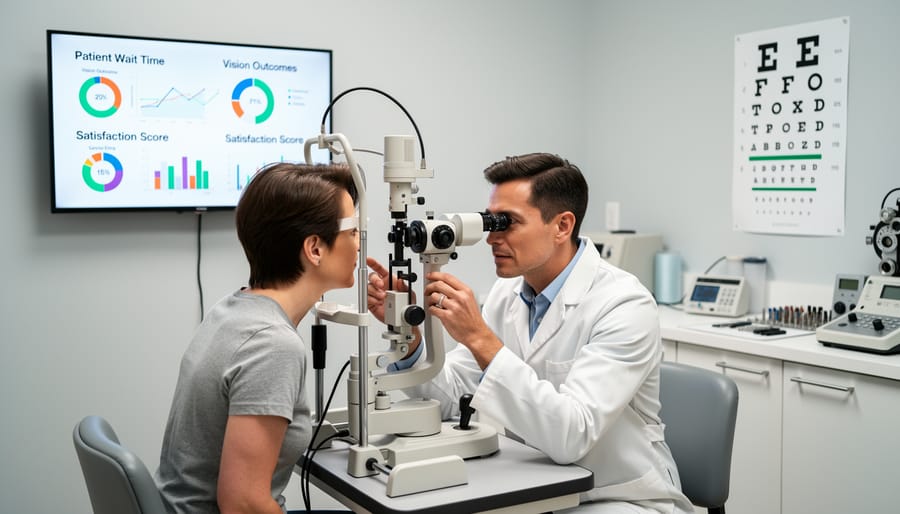
Vision health indicators follow a continuous cycle of measurement and improvement that helps eye care facilities maintain high standards. Understanding this process shows how data translates into better patient care.
The cycle begins with setting benchmarks. Eye care facilities and professional organizations establish performance targets based on clinical evidence, research findings, and consensus guidelines from ophthalmology and optometry associations. These benchmarks represent achievable standards rather than theoretical ideals. A clinic might set targets for the percentage of diabetic patients who receive annual retinal screenings, or for patient satisfaction scores after refractive surgery.
Data collection happens through multiple channels during routine care. Patient records capture clinical outcomes like visual acuity measurements before and after treatment. Screening programs track who receives recommended tests and when. Electronic health records flag gaps in care, such as patients due for follow-up appointments. This information flows into databases without adding extra burden to patient visits.
Analysis reveals patterns and opportunities. Quality teams review the collected data quarterly or annually, comparing actual performance against established benchmarks. They identify trends, like whether complication rates are rising or certain patient groups face barriers to timely care. This step transforms raw numbers into actionable insights, much like how studying nature’s vision solutions helps researchers understand optical efficiency.
Improvement initiatives complete the cycle. When analysis shows a gap, facilities implement targeted changes. If diabetic screening rates fall short, they might add automated appointment reminders or train staff to identify at-risk patients during routine visits. Successful programs share their methods with other facilities, raising standards across the field.
The cycle then repeats, with new data showing whether improvements worked. This ongoing process ensures eye care quality evolves alongside advancing knowledge and changing patient needs, making KPIs living tools rather than static requirements.
Types of Vision and Eye Health Performance Indicators
Screening and Prevention Indicators
Screening and prevention indicators measure how effectively providers identify patients at risk for vision problems before significant damage occurs. These KPIs track whether the right people receive timely examinations based on their risk factors, helping practices catch treatable conditions early.
Eye care facilities monitor several key screening metrics:
- Diabetic retinopathy screening rates among patients with diabetes
- Glaucoma screening for individuals over 60 or with family history
- Pediatric vision screening compliance for children at recommended ages
- Age-related macular degeneration checks for seniors showing early signs
For diabetic patients, routine eye examinations are critical since diabetes-related eye disease often develops without symptoms. diabetic eye screening standards emphasize regular monitoring because early detection allows treatment before irreversible vision loss occurs. Similarly, glaucoma screening targets high-risk groups because the condition damages vision gradually, and many people don’t notice changes until substantial loss has happened.
Pediatric screening compliance matters because undetected vision problems in childhood can lead to permanent visual impairment if the critical developmental window closes before treatment begins. Children rarely complain about blurry vision since they don’t know what clear sight should look like.
These prevention-focused indicators help providers systematically reach vulnerable populations rather than waiting for patients to develop noticeable symptoms. When screening rates are tracked and improved, more treatable conditions get caught at stages where intervention preserves sight.
Treatment Outcome Indicators

Treatment outcome indicators measure how well patients see and function after receiving eye care interventions. These metrics help facilities track whether treatments deliver the intended benefits and where adjustments might improve results.
For cataract surgery, the most common outcome indicator is visual acuity improvement. Providers measure how many patients achieve clearer vision after the procedure, typically comparing pre-surgery and post-surgery vision tests. These measurements show whether the vision correction achieved the goals discussed during consultation.
In glaucoma management, intraocular pressure control serves as a primary outcome indicator. Eye care teams track whether treatments successfully lower and maintain eye pressure within target ranges for each patient. Since glaucoma management is ongoing, these indicators monitor long-term control rather than one-time results. When pressure remains stable, it signals the treatment plan is working to slow disease progression.
For patients receiving macular degeneration treatment, vision stability becomes the key metric. Providers track whether vision remains steady, improves, or declines over time with ongoing injections or other interventions. These indicators help care teams determine if treatment schedules need adjustment.
What do these outcome indicators mean for you as a patient? They provide realistic expectations about what treatments typically achieve. When discussing procedures, you can ask your eye care provider about their typical outcomes for patients with similar conditions. This conversation helps you understand the potential benefits and make informed decisions about your treatment options.
Safety and Complication Indicators
Safety and complication indicators track events where something goes wrong during or after eye care procedures. Eye care facilities monitor post-surgical infections, unexpected complications during surgery, medication reactions, and adverse events following treatments like laser procedures or injections. These metrics help providers identify patterns that might signal a need for procedural changes or additional staff training.
For cataract surgery, facilities track infections that develop after the procedure, complications during surgery such as damage to surrounding structures, and whether patients experience unexpected vision problems. Glaucoma treatment monitoring includes medication side effects that cause patients to stop using prescribed drops, complications from drainage surgeries, and adverse reactions to in-office procedures. Macular degeneration injection tracking covers infection risk, inflammation responses, and rare but serious complications like retinal detachment.
Regular review of these indicators allows facilities to spot problems early. If infection rates begin trending upward, a clinic might examine its sterilization protocols or post-operative care instructions. When certain complications occur more frequently with specific techniques or equipment, providers can adjust their approach before more patients are affected. This ongoing monitoring creates a feedback loop that continuously improves patient safety without waiting for major issues to emerge.
Access and Timeliness Indicators
Access to timely eye care directly affects vision outcomes, especially for conditions where delays can lead to permanent vision loss. Facilities track how quickly patients can schedule appointments, how long they wait for urgent cases, and whether patients return for necessary follow-up visits. For conditions like retinal detachment or acute angle-closure glaucoma, same-day or next-day access can mean the difference between preserved and lost vision. Regular monitoring appointments also matter: patients who miss follow-up visits after learning how vision correction works or after starting glaucoma treatment may experience complications that could have been caught early. These timing metrics help facilities identify bottlenecks in scheduling systems and ensure patients receive care when they need it most.
How These Indicators Are Used in Eye Care Settings
Eye care facilities use performance indicators as diagnostic tools for their own operations. When a clinic notices its diabetic retinopathy screening completion rate trailing behind where it should be, administrators can investigate whether the issue stems from appointment scheduling, patient follow-through, or referral coordination. Rather than guessing at problems, the data points to specific workflow stages that need attention. Some facilities hold regular review meetings where staff examine trends across multiple indicators together, looking for patterns that suggest systemic issues rather than isolated incidents.
Hospitals and multi-location practices often compare performance across their sites to identify both struggling locations and best practices worth replicating. A hospital system might notice one of its ophthalmology departments maintains notably better follow-up visit compliance than others, then study what that location does differently with appointment reminders or patient education. These internal benchmarks help organizations learn from their own successes while supporting locations that need improvement.
Public health programs rely on population-level KPI data to identify communities with unmet vision care needs. When regional data shows low screening rates for certain conditions or demographics, health departments can direct resources toward outreach programs, mobile screening units, or partnerships with community organizations. These programs track whether interventions actually move the numbers, adjusting strategies based on what the data reveals about effectiveness.
Patients benefit from understanding these indicators when evaluating where to receive care. Rather than asking vague questions about quality, you can inquire specifically: Does the facility track surgical outcomes? How do they monitor for complications? What screening protocols do they follow for patients with diabetes or family histories of eye disease? Practices that actively measure their performance can usually discuss their processes clearly. While individual facilities may not publish all their metrics publicly, their willingness to discuss quality measurement and improvement efforts tells you something meaningful about their approach to care.
The most effective use of KPIs happens when all stakeholders recognize them as improvement tools rather than scorecards. A clinic using indicators to refine its referral process for urgent conditions serves patients better than one simply collecting data to meet requirements.
Understanding the Limitations of Health Care Metrics
Performance metrics offer valuable insights into eye care quality, but they tell only part of the story. A facility’s numbers reflect broad patterns across many patients, not what will happen in your specific case. Your age, overall health, condition severity, and individual response to treatment all influence outcomes in ways that standard indicators can’t capture.
Raw numbers need context to be meaningful. A clinic treating more complex cases might show different results than one handling mostly routine procedures, yet both could be providing excellent care. Similarly, a provider focusing on advanced disease management serves a different population than one emphasizing preventive screenings. Looking at single metrics in isolation can mislead rather than inform.
The most accurate picture emerges when you consider multiple indicators together. How a facility performs across screening rates, treatment outcomes, safety measures, and access tells you more than any individual number. These metrics work best as conversation starters with your eye care provider rather than as definitive rankings.
Understanding eye diagram basics helps you grasp why individualized care matters alongside population-level metrics. Each person’s eye anatomy and health status creates unique considerations that standard measurements don’t fully address.
Think of KPIs as quality improvement tools rather than final judgments. They help facilities identify where they can do better and track progress over time. For patients, they’re one factor among many, including provider expertise, communication style, location convenience, and your comfort level with the care team.
Common Questions About Vision Health Performance Indicators
Finding reliable information about eye care quality takes work, but several approaches can help. Start with your provider directly: practices that track their performance are often willing to discuss their approach to quality measurement during consultations. Ask about their procedures for monitoring outcomes and patient safety, how they handle complications when they occur, and what follow-up protocols they use to track results.
Can I see performance data for my eye doctor or clinic?
Some larger facilities and hospital-based eye centers publish quality reports, though comprehensive public data remains limited. Ask your provider what metrics they track and whether they participate in any quality registries or accreditation programs.
What questions should I ask about facility performance?
Ask how they track patient outcomes, what their approach is to preventing complications, and how they handle follow-up care. Inquire about their experience with your specific condition and what results patients typically see.
How do I balance quality metrics with practical factors like location?
Consider quality indicators alongside accessibility, since consistent follow-up care matters enormously for vision health. A slightly closer facility where you’ll actually attend appointments may serve you better than a distant center with marginally higher performance scores.
Are national quality databases available for eye care?
Some specialty organizations maintain voluntary registries for specific procedures, though patient-facing search tools are less developed than in other medical fields. Your insurance provider may offer quality information about in-network eye care facilities.
Remember that quality indicators work best as conversation starters rather than absolute rankings. A provider’s willingness to discuss their performance openly, explain their clinical approach, and answer your specific concerns often matters as much as any single metric. Consider multiple factors together: clinical quality measures, practical access, insurance coverage, and your comfort level with the care team all contribute to successful long-term vision care.