
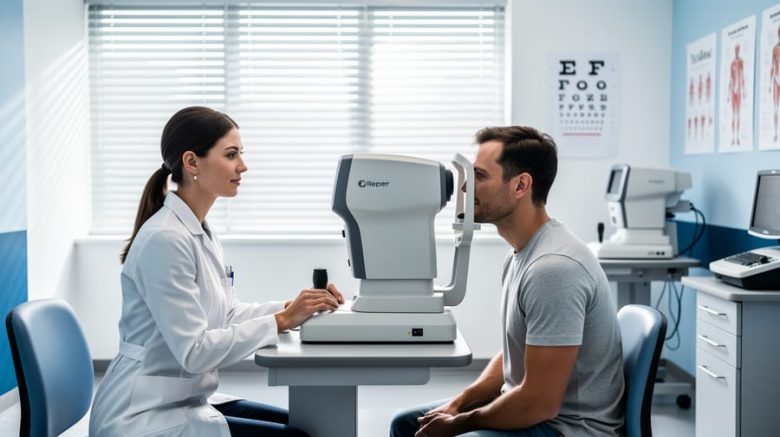
The Optos Silverstone RGB is the most complete retinal imaging system we’ve evaluated, and its main strength is simple: it captures a true color, ultra-widefield view of the retina in a single image. That makes it a strong fit for eye care clinics and the patients they serve, not a device you’d buy for home use.
If you’ve searched for “opto reviews,” you’re likely trying to figure out what this technology is and whether it’s worth asking about at your next eye exam. Optos says its ultra-widefield devices image more than 80% of the retina, or 200 degrees, in one capture. That matters because the retina is the light-sensing tissue at the back of your eye, and problems often start at the far edges, where standard imaging can miss them.
The Silverstone RGB also pairs that wide view with guided Swept Source OCT, a scan that shows the retina’s layers in cross-section, and offers nine imaging modalities in one system, according to the manufacturer. In our evaluation, we focused on what those capabilities mean for patients and for the clinicians who use them.
Below, we cover who it’s best for, how we assessed it, and the questions worth bringing to your next appointment. Have you had an ultra-widefield scan? Share your experience in the forum.
What Is the Optos Silverstone RGB, in Plain Language?
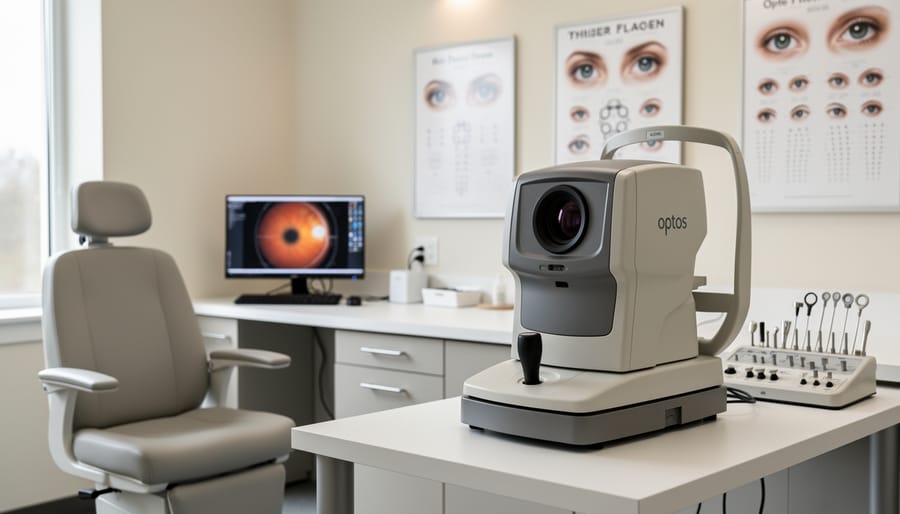
When you sit down for an eye exam, the doctor wants a clear look at your retina. That’s the light-sensing layer at the back of your eye, and it turns what you see into signals your brain can read. Changes in the retina can start quietly, sometimes well before your vision seems off, which is why photographing it matters for catching problems early. If you’d like a refresher on how the retina fits with the rest of your eye anatomy that’s a good place to start.
Retinal imaging is simply taking a detailed picture of that layer so a clinician can study it and compare it over time. Optos is a company that makes this kind of equipment, and its signature picture is called an optomap image. The Silverstone RGB is one of its devices, built for use in eye clinics.
Two terms come up often. “Ultra-widefield” means the camera captures an unusually large portion of the retina at once. Optos says its devices image more than 80% of the retina, or 200 degrees, in a single capture. “OCT,” short for optical coherence tomography, is a scan that shows the retina’s layers in cross-section, a bit like looking at the side of a sliced cake instead of the top. Optos says the Silverstone RGB is integrated with guided Swept Source OCT.
One practical point: this is professional equipment that clinics use, not something you buy for home. We couldn’t verify current availability or retailers, so ask your eye care provider whether their practice uses it.
Key Details at a Glance: What Optos Says the Silverstone RGB Offers
Here is what Optos publicly says about the Silverstone RGB. Every item below comes from the manufacturer, so treat it as company-stated information rather than independent findings.
| Feature | What Optos states | What it means for you |
|---|---|---|
| Retinal coverage | Its ultra-widefield devices image more than 80% or 200° of the retina in a single capture | A broader view of the retina may be recorded in one image |
| True color imaging | The only device that captures true color, 200° optomap ultra-widefield images in a single capture | The picture your clinician reviews may look closer to natural retinal color |
| OCT integration | Seamlessly integrated with guided Swept Source OCT | Surface images can be paired with cross-section scans of the retinal layers |
| Imaging modalities | Nine imaging modalities in one system | One device may cover several types of retinal imaging |
| Price and availability | Not verified | Not verified; ask your provider |
A few of these claims deserve a closer look. The “only device” description is Optos’s own positioning, and we couldn’t confirm it independently. The same goes for the coverage figure, which is the company’s published number. These specifications describe what the system is designed to capture. They don’t tell you how often it changes a diagnosis or a treatment plan in everyday practice.
We also couldn’t confirm what the Silverstone RGB costs, where it is sold, or which retailers carry it. It is clinic equipment rather than something you pick up off a shelf, so the practical route is to check with Optos directly or ask your eye care provider whether their office uses it.
Performance: What the Technology May Mean for Your Eye Exam
Seeing More of the Retina in One Capture
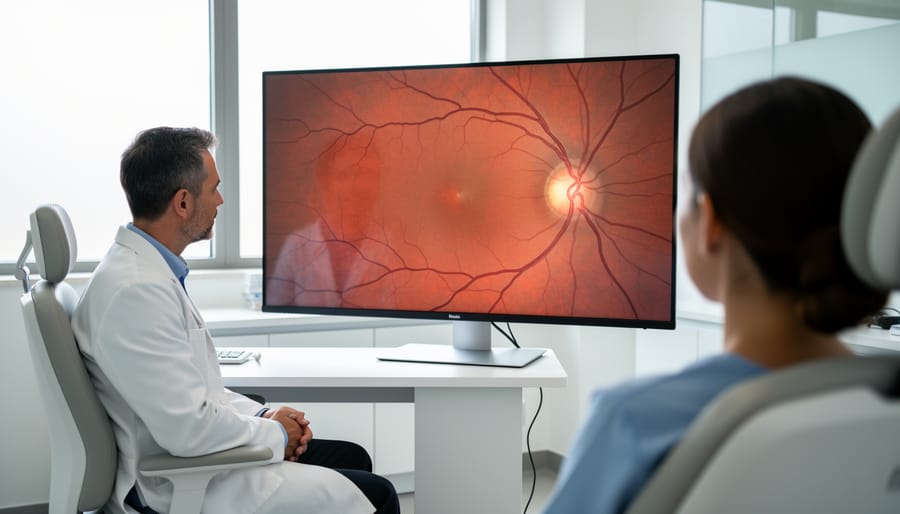
A single 200° capture means the device records a very wide slice of the retina in one image. Optos states that its ultra-widefield devices image more than 80% of the retina in a single capture, and that the Silverstone RGB does this in true color. Standard retinal cameras typically photograph a smaller central area, so getting a fuller picture can take several shots from different angles.
Fewer captures could mean a shorter, more comfortable visit. You may spend less time staring into bright flashes, and your clinician may need fewer repositioning steps. That said, this is a potential benefit, not a guarantee. How quick or comfortable imaging feels depends on your eyes, the clinic’s workflow, and what your provider needs to see.
Notably, a wider view doesn’t replace your clinician’s judgment. It simply gives them more retina to look at in one go.
Pairing Widefield Images With OCT
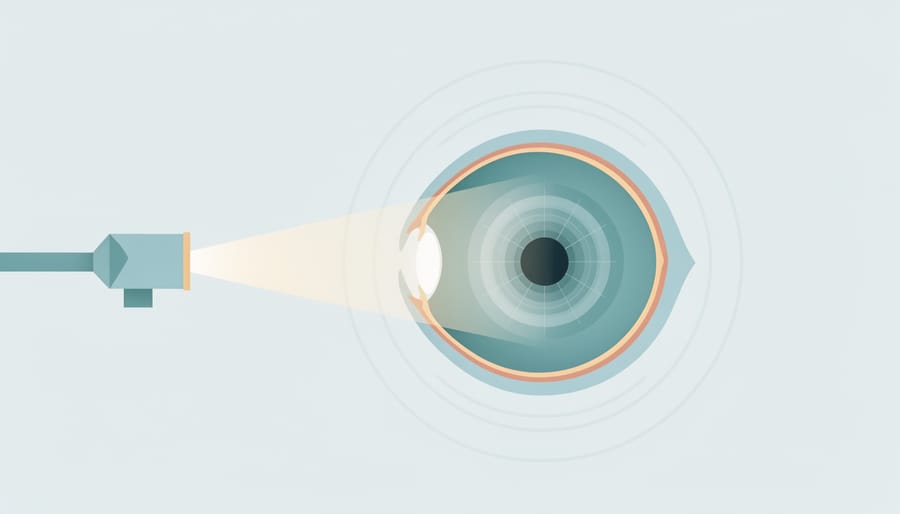
A widefield photo shows the surface of the retina, a bit like a satellite image of a landscape. OCT, short for optical coherence tomography, adds the missing depth. It uses light to build a cross-section of the retina, so a clinician can see the individual layers rather than just the top view.
Optos says the Silverstone RGB is seamlessly integrated with guided Swept Source OCT. “Guided” means the widefield image helps direct where the OCT scan is taken, so the clinician can examine a spot of interest in detail without switching to a separate machine. Swept Source is a type of OCT that uses a longer-wavelength light, which Optos positions as a way to look deeper into the eye’s tissue.
In practice, the pairing may let your clinician move from the big picture to a close-up in one visit.
Who It’s For: Patients and Caregivers Who May Benefit Most
Most people meet ultra-widefield imaging by chance. You sit down for an exam, the clinic offers a retinal photo, and you wonder whether you need it. These are the readers most likely to bring it up:
- People with a family history of retinal or other inherited eye disease.
- Anyone managing a condition that affects the retina, who may want closer tracking over time.
- People with diabetes who need regular retinal monitoring.
- Patients who want a documented baseline image to compare against future visits.
- Caregivers of children or older adults who want to understand what a screening can show.
If you’re helping a parent or grandparent, it also helps to read up on common eye conditions in older adults so you know what the clinic may be looking for.
Here’s the practical catch. Whether a particular device gets used is the clinic’s call, not yours. Practices differ in the equipment they own, and a clinic that doesn’t have a Silverstone RGB can still give you a thorough, high-quality exam with other tools. Treat the imaging as one option to ask about, not a requirement for good care.
Some readers can reasonably skip making it a deciding factor:
- People with no symptoms, no family history, and a clean recent exam.
- Patients whose clinician is already monitoring them well with other methods.
- Anyone choosing between clinics who would be picking on equipment alone.
In most cases, your clinician’s judgment matters more than the machine.
Price and Value: What to Know About Cost Before Your Appointment
We couldn’t verify any pricing for the Optos Silverstone RGB, and we found no confirmed fee schedule for retinal imaging at clinics either. So we won’t guess at a number. Availability and current retailers were also unconfirmed.
Here’s what holds true in general. This is professional equipment, so any purchase price is a decision the practice makes, not something you’d pay directly. What reaches you is the clinic’s fee policy. Some practices fold advanced imaging into the exam fee. Others list it as a separate charge, and insurance coverage for it varies by plan and by the reason for your visit.
Since policies differ so much, it helps to ask before you sit down in the chair. Here’s a simple order to follow:
- Ask whether retinal imaging is already part of the exam fee or billed on its own.
- Ask what out-of-pocket charge, if any, you should expect for the imaging.
- Check with your insurer whether the imaging is covered under your plan, and whether coverage depends on a medical reason.
- Ask what you will receive afterward, such as a review of the images with your clinician or a copy for your records.
- Request a written estimate so there are no surprises on the bill.
Value here comes down to whether the imaging fits your situation. If you have a family history of eye disease or a condition that affects the retina, the extra view may be worth asking about. If your exam is routine and low-risk, your clinician can tell you whether it adds much for you.
How We Tested and Evaluated the Silverstone RGB
The Silverstone RGB is professional clinic equipment, so we could not put it through hands-on clinical testing. Instead, this review is specification and evidence based. We compared what Optos publishes about the device against what a patient actually needs to know, and we weighed it against general eye-care guidance.
Here is what we looked at:
- Manufacturer-published specifications, such as the single-capture view, nine imaging modalities and integrated Swept Source OCT.
- Whether Optos’ claims hold together and don’t contradict each other.
- How clearly each feature translates into a real benefit for patients.
- Comparison dimensions: features, specs, compatibility and price transparency.
- A cross-check against widely accepted eye-care advice, including how imaging fits alongside a full exam and your own eye symptoms.
The limits matter just as much. Nearly everything here comes from the manufacturer, which has an obvious interest in presenting its product well. We could not verify pricing, availability or which retailers or clinics offer the system, so we have left those details out rather than guess. Independent clinical studies would also be needed before anyone treats these claims as proven outcomes for patients.
Think of this review as a starting point for a conversation with your eye care professional, not a final judgment. If you’ve had widefield retinal imaging yourself, we’d love to hear how it went. Share your experience in the EyeWise forums so other readers can learn from it.
Strengths and Limitations at a Glance
When you line up everything Optos says about the Silverstone RGB, a clear picture emerges of what it may do well. Based on the manufacturer’s published specifications, the strengths center on how much it captures and how many tools sit in one system. Just as important is what we can’t confirm from company claims alone.
Pros
- Optos says it captures more than 80% or 200° of the retina in a single capture.
- Optos describes it as the only device offering true color, 200° ultra-widefield images in one capture.
- Optos says it offers nine imaging modalities in one system.
- Optos states it integrates with guided Swept Source OCT for added depth detail.
Cons
- It is clinic equipment, so you can’t simply buy or try it yourself.
- Price and availability could not be verified.
- The performance claims come from the manufacturer and need independent clinical evidence.
- It is not a replacement for a comprehensive eye exam.
The caution here is simple. Imaging is one tool among many, and even a very capable scan only helps when a trained clinician interprets it alongside your history and symptoms. Think of it as a useful addition to preventive eye care not the foundation of it. Regular exams, healthy habits, and honest conversations with your eye care professional still do the heavy lifting.
Questions to Ask Your Eye Care Professional (Expert Advice)
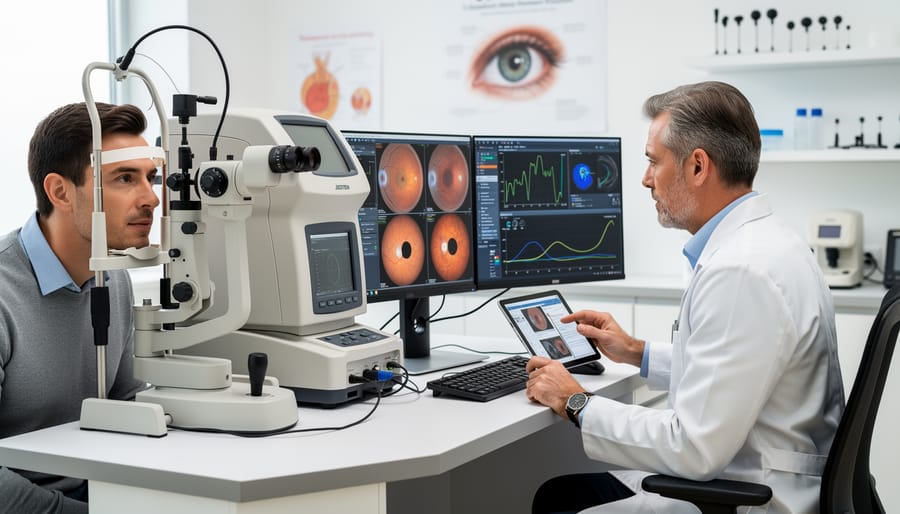
Walking into an eye exam with a few good questions can turn a routine visit into a real conversation. Since practices differ in the equipment they use, start by asking what imaging your clinic offers and whether it includes ultra-widefield or OCT scans, the kinds of technology Optos describes for its systems.
Here are some questions worth bringing:
– Which imaging does this practice use, and why was it chosen for me?
– What do my images show, and can you point out anything you’ll watch over time?
– How often do you recommend imaging for someone with my history?
– Is there a separate fee, and does my insurance cover it?
– How and when will I receive my results, and can I get copies for my records?
Your eye care professional is the best guide to what your eyes need, so lean on their judgment rather than on any device’s specifications alone. If you’re curious how others have found the experience, the EyeWise community forum is a good place to compare notes with readers who’ve had similar imaging. Just remember that your own clinician’s advice should always come first.
Frequently Asked Questions About Optos Retinal Imaging
What does Optos do?
Optos makes retinal imaging devices that capture a very wide view of the back of the eye. The company says its ultra-widefield devices image more than 80% or 200° of the retina in a single capture.
What is optomap imaging?
Optomap is Optos’s name for its ultra-widefield retinal image. According to Optos, the Silverstone RGB captures true color, 200° optomap images in a single capture, so your clinician can look at much of the retina in one picture.
Can I buy an Optos device?
These are professional systems designed for eye care clinics, not products for home use. We could not confirm current availability or retailers, so any purchase question is best directed to Optos or your eye care provider.
Is retinal imaging a replacement for a dilated eye exam?
No. Imaging gives your clinician additional information, but it works alongside a comprehensive eye exam rather than standing in for it. Your eye care professional decides which combination suits your situation.
Where can I find the Silverstone RGB?
We have not verified where it is offered. The simplest approach is to ask your eye care provider which imaging equipment their practice uses.
If you have a question that is not covered here, the EyeWise forums are a good place to ask, and you may find others who have been through similar imaging appointments.
Based on the specifications Optos publishes, the Silverstone RGB looks like a capable imaging system. A wide single-capture view, true color images and integrated OCT could give your eye care professional more to work with. Still, those are manufacturer claims, so treat them as a starting point rather than proof of better outcomes for you.
The most useful next step is simple: ask your own clinic what imaging it uses and what that imaging means for your situation. Equipment varies from practice to practice, and no scan replaces a comprehensive eye exam with a trained professional. Keep those regular exams as the foundation of your eye care.
If you want to keep learning, browse EyeWise’s other optical product reviews and recommendations. And if you’ve had retinal imaging yourself, join the EyeWise forums and share what the experience was like. Your questions and stories may help the next reader walk into their appointment feeling prepared.