
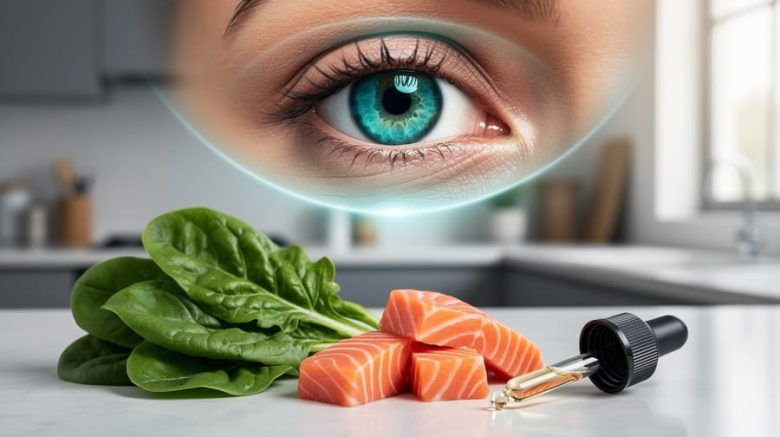
Eye nutrition refers to the specific vitamins, minerals, and antioxidants that protect vision and support the long-term health of your eyes. These nutrients work at the cellular level to shield against oxidative damage, maintain the integrity of eye tissues, and reduce the risk of age-related conditions like macular degeneration and cataracts.
Your eyes face constant oxidative stress from light exposure, environmental factors, and the metabolic demands of vision itself. Unlike many organs that can rely on general wellness habits alone, your eyes require a targeted mix of compounds that most people don’t get in adequate amounts through a typical diet. Lutein and zeaxanthin accumulate in the retina to filter harmful blue light. Omega-3 fatty acids form structural components of photoreceptor cells. Vitamin A enables the chemical reactions that translate light into electrical signals your brain can interpret.
The science is clear: what you eat directly influences how well you see, both now and decades from now. Population studies consistently show that people who consume higher levels of key eye nutrients experience lower rates of vision loss as they age. Clinical trials have demonstrated measurable improvements in visual function when participants increase their intake of specific compounds.
This article breaks down which nutrients matter most for your eyes, explains the mechanisms behind their protective effects, and shows you how to build a practical eating plan that delivers results. You’ll learn which foods pack the highest concentrations of vision-supporting compounds and how to address specific eye health concerns through targeted dietary choices.
What Eye Nutrition Means for Your Vision

Eye nutrition refers to the specific vitamins, minerals, antioxidants, and fatty acids your body uses to build, maintain, and protect the delicate tissues of your eyes. Unlike general nutrition, eye nutrition targets the unique biological demands of your visual system, which processes light and generates neural signals under conditions that create substantial cellular stress.
Your eyes face challenges few other organs encounter. The retina contains the highest concentration of metabolically active cells in your body, burning through energy at rates comparable to your brain. Every time light enters your eye, it triggers photochemical reactions that, while essential for vision, also generate reactive molecules capable of damaging cellular structures. This constant exposure means the tissues throughout your eye diagram require continuous protection and repair mechanisms that depend entirely on adequate nutrient supply.
Understanding how these nutrients function requires knowing a few key concepts:
- Antioxidants
- Molecules that neutralize harmful free radicals, preventing them from damaging cell membranes, proteins, and DNA in eye tissues.
- Oxidative stress
- The imbalance between damaging free radicals and protective antioxidants, which accelerates aging and disease in the eyes.
- Macular pigment
- A protective layer of carotenoids in the central retina that filters blue light and shields photoreceptors from oxidative damage.
- Photoreceptors
- Specialized retinal cells (rods and cones) that convert light into electrical signals, requiring specific nutrients to function properly.
Certain nutrients concentrate in specific eye structures because they perform irreplaceable functions there. Omega-3 fatty acids make up a significant portion of retinal cell membranes, while zinc concentrations in the retina exceed those found almost anywhere else in your body. These aren’t random accumulations but rather evolutionary adaptations that ensure your eyes have the molecular tools they need exactly where they’re needed most.
How Eye Nutrition Works in Your Body
When you eat foods rich in eye-supporting nutrients, they embark on a journey that begins in your digestive system and ends in the delicate tissues of your eyes. After absorption through your intestinal wall, these compounds enter your bloodstream and are transported to ocular tissues through an intricate network of blood vessels. The eyes sit behind a selective barrier system, similar to the brain’s blood-barrier, that carefully regulates which substances can enter, prioritizing nutrients essential for visual function while blocking potential toxins.
Your eyes face a unique challenge that makes nutritional support critical: constant exposure to light generates reactive oxygen species, or free radicals, that damage cellular structures. Every time photons hit your retina, they trigger chemical reactions necessary for vision but also produce unstable molecules that attack proteins, lipids, and DNA. Antioxidant nutrients like vitamins C and E, along with carotenoids such as lutein and zeaxanthin, donate electrons to neutralize these free radicals before they cause harm. Think of them as a defensive shield that intercepts damage at the molecular level, particularly in the macula where light exposure is most intense.
Beyond antioxidant defense, specific nutrients perform structural and functional roles. Omega-3 fatty acids, especially DHA, integrate into the cell membranes of photoreceptors, making them more flexible and responsive to light signals. These same fatty acids also support the lipid layer of your tear film, preventing rapid evaporation that leads to dry, irritated eyes. Vitamin A converts into retinal, the light-sensitive molecule in your rod cells that enables you to see in dim conditions, without adequate vitamin A, this conversion fails and night vision deteriorates.
Minerals like zinc concentrate in the retina and support enzymatic reactions that regenerate visual pigments after light exposure. The nutrient-rich environment in your macula, maintained by a steady supply of carotenoids from your diet, acts as natural blue light filtration, reducing the high-energy wavelengths that penetrate deepest into retinal tissue. This absorption happens gradually as nutrients accumulate over weeks and months, which explains why dietary changes show benefits over time rather than immediately.
Essential Nutrients for Eye Health
Vitamins That Protect Your Eyes
Four vitamins stand out for their protective effects on different parts of the eye, each supporting specific structures and functions that keep your vision sharp.
Vitamin A is essential for producing rhodopsin, the pigment in your retinas that enables you to see in low light. Without adequate vitamin A, you’ll struggle with night vision and may develop dry eyes as tear production decreases. Your body converts beta-carotene from orange and dark green vegetables into usable vitamin A, making carrots genuinely beneficial for your eyes, though they won’t give you superhuman vision. Severe deficiency can lead to xerophthalmia, a progressive eye disease that causes blindness in developing countries.
Vitamin C acts as a powerful antioxidant throughout your eye, with particularly high concentrations in the aqueous humor (the fluid in the front of your eye). This vitamin supports collagen production in the cornea and blood vessels, maintaining structural integrity. Research consistently shows that people with higher vitamin C intake have significantly lower cataract risk, as the vitamin protects lens proteins from oxidative damage caused by UV exposure and age.
Vitamin E works alongside vitamin C to neutralize free radicals in the fatty tissues of your retina. The AREDS study found that vitamin E, combined with other antioxidants, slowed progression of age-related macular degeneration in people at high risk for the disease.
B vitaminsparticularly B6, B9 (folate), and B12, help reduce homocysteine levels in your blood. Elevated homocysteine is linked to increased risk of several common eye conditions including age-related macular degeneration and retinal vein occlusion. These vitamins support the blood vessels that nourish your eyes.
Minerals Critical for Vision
While vitamins often steal the spotlight, certain minerals play equally vital roles in maintaining eye structure and function. Your body relies on these trace elements to support everything from light detection to antioxidant defense systems.
Zinc concentrates heavily in the retina and choroid, where it enables vitamin A to form rhodopsin, the pigment that lets you see in dim light. This mineral also supports the structural integrity of retinal cells and acts as a cofactor for antioxidant enzymes. Without adequate zinc, you may experience impaired night vision and increased susceptibility to age-related eye conditions. Oysters, beef, pumpkin seeds, and legumes provide rich sources.
Selenium works as a component of glutathione peroxidase, a powerful antioxidant enzyme that protects eye tissues from oxidative damage caused by light exposure and metabolic processes. Brazil nuts, fish, poultry, and whole grains deliver this essential mineral. Even mild selenium deficiency can compromise your eyes’ antioxidant defenses.
Copper supports collagen and elastin formation through its role in cross-linking these structural proteins, critical for maintaining the integrity of blood vessels supplying the retina. It also works alongside zinc in antioxidant enzyme systems. Shellfish, nuts, seeds, and organ meats offer good copper sources, though most people meet their needs through varied diets.
Carotenoids and Plant Compounds
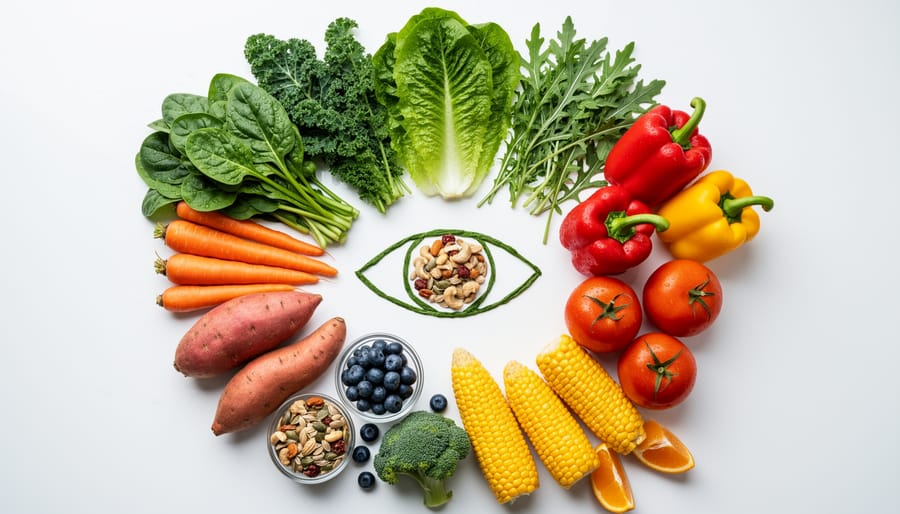
Lutein and zeaxanthin stand out as the most critical carotenoids for vision. These yellow pigments concentrate in the macula, the central part of your retina responsible for sharp, detailed sight. They act as natural sunglasses, filtering harmful blue light before it reaches the photoreceptors underneath. Studies show people with higher macular pigment density, built through dietary intake of these compounds, have better visual performance and lower risk of macular degeneration.
Your body doesn’t produce lutein or zeaxanthin, so you must get them from food. Dark leafy greens like kale, spinach, and collard greens are the richest sources. Egg yolks offer another excellent option; the fat in eggs helps your body absorb these fat-soluble nutrients more effectively than greens alone.
Beta-carotene, found in orange and yellow vegetables like carrots, sweet potatoes, and butternut squash, serves as a precursor to vitamin A. Your body converts it as needed, making it a safer alternative to high-dose vitamin A supplements. However, beta-carotene alone won’t build macular pigment density the way lutein and zeaxanthin do.
Other beneficial plant compounds include astaxanthin from salmon and shellfish, which crosses the blood-retina barrier to protect photoreceptor cells, and anthocyanins from berries, which strengthen capillaries supplying the eyes. These work synergistically with the major carotenoids, providing layered antioxidant protection against light-induced oxidative damage.

Omega-3 Fatty Acids
Omega-3 fatty acids, particularly DHA (docosahexaenoic acid), are structural components of the retina that directly influence visual function and eye comfort. DHA makes up roughly 60% of the fatty acids in photoreceptor cell membranes, where it maintains the fluidity and flexibility these cells need to convert light into electrical signals efficiently. This high concentration isn’t coincidental. Your retina constantly turns over these membrane components, requiring a steady dietary supply to maintain optimal visual processing.
Beyond structure, omega-3s provide powerful anti-inflammatory benefits throughout the eye. They reduce inflammatory signaling molecules that can damage delicate ocular tissues over time, offering particular protection to the blood vessels serving the retina. This anti-inflammatory action helps preserve vascular health and may slow progression of conditions like age-related macular degeneration, where chronic inflammation plays a destructive role.
For dry eye sufferers, omega-3s improve both the quantity and quality of tears. These fatty acids support the meibomian glands that produce the oily layer of your tear film, preventing rapid evaporation. Studies show that people consuming higher amounts of omega-3s report fewer dry eye symptoms and better tear stability compared to those with lower intake.
You’ll find DHA and its partner EPA primarily in fatty fish like salmon, mackerel, sardines, and anchovies. Plant sources such as flaxseed and walnuts provide ALA, which your body converts to DHA at low efficiency rates of around 5%, making direct sources more effective for eye health.
How Eye Nutrition Is Used to Prevent Eye Conditions
Age-Related Macular Degeneration Prevention
The landmark Age-Related Eye Disease Studies (AREDS and AREDS2) established that specific nutrient combinations can slow AMD progression by about 25% in people with intermediate or advanced disease. The original AREDS formula included high-dose vitamin C, vitamin E, beta-carotene, zinc, and copper. AREDS2 refined this by replacing beta-carotene (which increased lung cancer risk in smokers) with lutein and zeaxanthin, proving that AREDS2 supplements slow AMD progression effectively. Beyond supplementation, dietary patterns rich in dark leafy greens (spinach, kale), fatty fish with omega-3s, and colorful vegetables provide these protective compounds naturally. Studies show people eating fish twice weekly have a 35% lower AMD risk compared to those eating fish less than once monthly. A Mediterranean-style diet emphasizing these foods, combined with preventive eye care screenings, offers the strongest protection against this leading cause of vision loss in older adults.
Cataract Risk Reduction
Cataracts develop when proteins in the eye’s lens undergo oxidative damage and clump together, creating cloudy areas that obstruct vision. Antioxidant vitamins, particularly C and E, act as the lens’s first line of defense against this process. Vitamin C exists in extraordinarily high concentrations in the aqueous humor surrounding the lens, where it neutralizes free radicals before they can damage the delicate lens proteins. Vitamin E protects the lipid components of lens cell membranes from oxidative breakdown.
Multiple studies link higher dietary intake of these antioxidants with significantly lower cataract risk. A Nurses’ Health Study found that women who took vitamin C supplements for ten years or longer showed a 60% reduction in cataract formation. Similarly, diets rich in carotenoids like lutein and zeaxanthin correlate with 20-30% lower cataract incidence.
The protective effect appears strongest from food sources rather than supplements alone. Eating five or more servings of fruits and vegetables daily provides the synergistic combination of antioxidants, fiber, and phytonutrients that work together to maintain lens transparency throughout aging.
Supporting Overall Eye Health
Beyond preventing major eye diseases, targeted nutrition plays a crucial role in managing everyday eye health challenges. For dry eye syndrome, omega-3 fatty acids stand out as particularly beneficial, studies show that EPA and DHA reduce inflammation in tear glands and improve tear quality. Aim for two servings of fatty fish weekly, or consider algae-based supplements if you avoid fish.
Blood sugar control is essential for protecting against diabetic retinopathy. Focus on low-glycemic foods that prevent glucose spikes: whole grains, legumes, non-starchy vegetables, and lean proteins. Chromium and magnesium help regulate insulin sensitivity, while antioxidants like vitamin C and alpha-lipoic acid may protect retinal blood vessels from glucose-related damage.
An anti-inflammatory diet benefits multiple eye conditions, from uveitis to general inflammation. Emphasize colorful fruits and vegetables, reduce processed foods and refined sugars, and incorporate anti-inflammatory spices like turmeric. The Mediterranean diet pattern, rich in olive oil, nuts, fish, and produce, consistently shows protective effects across various eye health markers.
Building an Eye-Healthy Diet

The most effective way to support your eye health through nutrition is to build a varied diet around whole foods rather than relying solely on supplements. While supplements can fill gaps, whole foods deliver nutrients in combinations that your body absorbs and uses more efficiently, along with fiber and other beneficial compounds that pills don’t provide.
Start by making simple swaps in your weekly meal rotation. Replace one or two dinners with fatty fish like salmon or mackerel to boost omega-3 intake. Add a handful of spinach or kale to your morning smoothie or sandwich. Snack on almonds instead of chips. These small changes accumulate over time, delivering consistent nutrient support that protects your eyes and enhances overall visual performance without requiring a complete dietary overhaul.
Focus on incorporating foods that naturally concentrate multiple eye-protective nutrients:
- Leafy greens: spinach, kale, collards (lutein, zeaxanthin, vitamin C)
- Colorful vegetables: carrots, sweet potatoes, bell peppers, broccoli (beta-carotene, vitamin C, antioxidants)
- Fatty fish: salmon, sardines, mackerel, tuna (omega-3 DHA and EPA)
- Nuts and seeds: almonds, walnuts, chia seeds, flaxseeds (vitamin E, omega-3, zinc)
- Citrus fruits: oranges, grapefruit, lemons (vitamin C)
- Eggs: particularly the yolks (lutein, zeaxanthin, zinc in bioavailable forms)
The Mediterranean eating pattern serves as an excellent template for eye health because it emphasizes these foods naturally. It centers on vegetables, fruits, whole grains, legumes, nuts, olive oil, and fish, while limiting processed foods and red meat. This pattern has been linked to reduced risk of age-related macular degeneration in multiple studies.
Aim for color variety on your plate. The pigments that give foods their vibrant hues, deep greens, bright oranges, rich purples, often signal the presence of carotenoids and antioxidants your eyes need. If you eat a rainbow of whole foods throughout the week, you’ll cover most of your nutritional bases without obsessing over individual nutrients. This approach supports not only your vision but also the broader health factors that impact your eyes, from blood sugar control to circulation, and it works synergistically with vision correction when needed for optimal eye function.
Frequently Asked Questions About Eye Nutrition
Should you take eye supplements or focus on food alone? The answer depends on your diet quality and risk factors. If you eat a varied diet rich in leafy greens, colorful vegetables, oily fish, and nuts, you may get adequate eye-protective nutrients without supplements. However, people at high risk for macular degeneration, those with confirmed nutrient deficiencies, or individuals who struggle to consume these foods regularly often benefit from targeted supplementation. The AREDS2 formula has strong evidence for slowing AMD progression in people already showing signs of the disease, but healthy eyes without risk factors typically don’t require the same high-dose approach.
Can diet alone reverse existing eye damage?
Nutrition can slow progression of conditions like macular degeneration and may prevent further deterioration, but it cannot restore vision already lost to structural damage. Think of eye nutrition as prevention and maintenance rather than repair.
Do eye vitamins protect against blue light from screens?
Lutein and zeaxanthin filter some blue light in the macula, but dietary amounts won’t significantly shield against screen exposure. These nutrients protect against cumulative oxidative damage rather than acting as real-time filters.
Are high-dose eye supplements safe for everyone?
Not necessarily. Beta-carotene supplements increase lung cancer risk in smokers, high-dose zinc can interfere with copper absorption, and some nutrients interact with blood thinners or other medications. Always discuss supplements with your doctor, especially if you take prescription drugs.
How long before nutritional changes benefit my eyes?
Macular pigment density increases measurably within three to six months of consistent lutein and zeaxanthin intake. For disease prevention, benefits accumulate over years of sustained dietary patterns rather than weeks.
Timing matters less than consistency when it comes to eye nutrition. Your body absorbs fat-soluble vitamins like A and E better when consumed with dietary fat, so taking supplements with meals improves uptake. Some people split their doses throughout the day to enhance absorption, though evidence supporting this practice remains limited. What matters more is making eye-healthy eating a daily habit rather than worrying about optimal timing windows.
Nutrient interactions can work for or against you. Zinc and copper compete for absorption, which is why quality eye formulas balance both minerals. Vitamin C enhances iron absorption but may reduce copper uptake at very high doses. Omega-3s have mild blood-thinning effects that compound with aspirin or anticoagulants. These interactions rarely cause problems at dietary levels but become relevant with high-dose supplementation, underscoring why whole-food approaches carry fewer risks than megadosing isolated nutrients.
Eye nutrition isn’t about quick fixes or miracle supplements. It’s a long-term investment in preserving your vision and protecting against age-related decline. The research is clear: nutrients like lutein, zeaxanthin, omega-3 fatty acids, vitamins C and E, and zinc genuinely support the structures of your eyes and reduce your risk of conditions like macular degeneration and cataracts.
Your best approach is building meals around colorful vegetables, fatty fish, nuts, seeds, and whole grains. These whole foods deliver not just isolated nutrients but a complete package of compounds that work together in ways supplements can’t replicate. When your diet falls short or you’re managing specific conditions, targeted supplementation can fill the gaps, but it shouldn’t replace real food.
Remember that what you eat is just one piece of the puzzle. Regular comprehensive eye exams catch problems early, when they’re most treatable. Protecting your eyes from UV exposure, managing chronic conditions like diabetes, and avoiding smoking all matter too.
The encouraging news? You don’t need a perfect diet to make a difference. Small, consistent changes add up. Swap one snack for a handful of almonds. Add spinach to your morning eggs. Choose salmon once a week. These simple shifts, maintained over months and years, give your eyes the nourishment they need to serve you well into the future. Start today.