
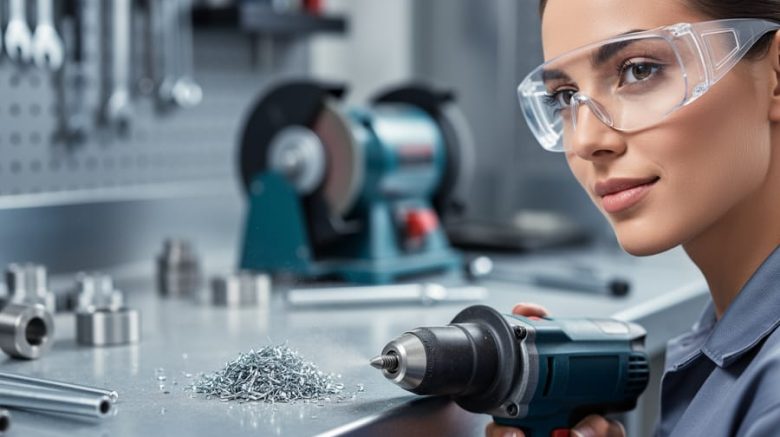
Your eyes are vulnerable to permanent damage in an instant, yet 90% of workplace eye injuries could be prevented with proper safety glasses. Whether you’re grinding metal in a workshop, using power tools at home, or working in a laboratory, the right eye protection stands between you and potentially life-changing vision loss. Every day, approximately 2,000 workers in North America suffer job-related eye injuries requiring medical treatment, with debris, chemicals, and projectiles causing everything from minor scratches to complete blindness.
The stakes extend beyond professional settings. Home improvement projects, yard work, and even simple tasks like opening champagne bottles send thousands to emergency rooms each year with preventable eye trauma. Unlike many common eye conditions that develop gradually, traumatic injuries happen without warning and often without a second chance for your vision.
Understanding when you need safety glasses, which type offers appropriate protection for your specific activities, and how to make wearing them a consistent habit can mean the difference between a close call and a devastating injury. This guide breaks down the science behind eye vulnerability, walks you through real-world scenarios where protection is critical, and gives you practical strategies to select and use safety eyewear that actually fits your life.
Why Your Eyes Need Protection
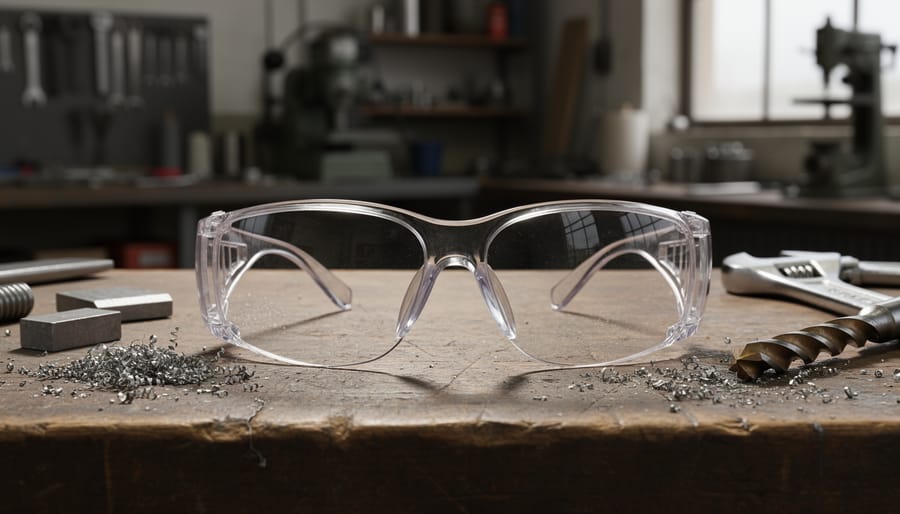
Your eye has no bones, no shell, no thick skin, just a transparent dome over a gel-filled sphere. A single grain of sand traveling at speed can scratch the cornea. A splash of drain cleaner can blind you in seconds. Unlike skin, which regenerates, or bone, which knits back together, many eye injuries create permanent damage. The cornea doesn’t grow back properly after chemical burns. Retinal detachment from blunt trauma often means partial vision loss even after surgery. Penetrating injuries can destroy the eye entirely.
The eye evolved for vision, not defense. While some creatures have protective features like nictitating membranes or reinforced eye sockets, animal eye protection that guards against their environments, human eyes sit exposed, relying entirely on reflexes that are far too slow when hazards appear without warning.
Four categories of hazards threaten your eyes daily. Flying debris is the leading cause of eye injuries: metal shavings, wood chips, glass fragments, stone particles from grinding or cutting. These projectiles travel faster than you can blink. Chemicals pose the second major threat. Acids, alkalis, solvents, and cleaners cause burns that progress even after you rinse. Radiation damage comes from welding arcs, UV light, lasers, and intense visible light that literally cooks retinal tissue. Finally, dust and particles seem minor until repeated exposure scratches the cornea or introduces infection.
The consequences aren’t always immediate but they’re often irreversible. Corneal abrasions can lead to scarring that clouds vision permanently. Chemical burns destroy the cells that keep your cornea clear. Blunt impacts cause cataracts, glaucoma, or retinal tears that develop into blindness years later. Over 2,000 workplace eye injuries occur daily in the U.S., and most involve people who weren’t wearing protection or were wearing the wrong type.
Your eyes cannot defend themselves. That’s why safety glasses exist.
Where Safety Glasses Are Essential
Workplace and Industrial Settings
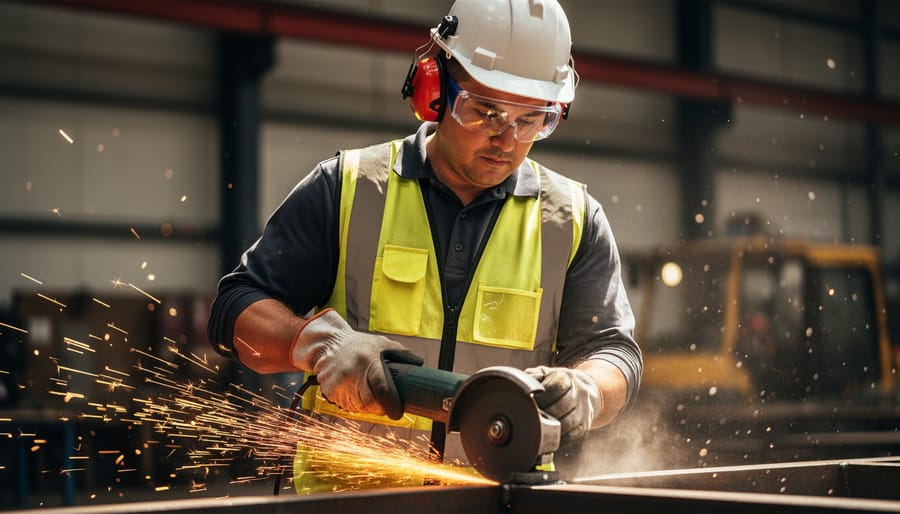
OSHA regulations make workplace eye protection mandatory, not optional. Federal standard 29 CFR 1910.133 requires protection wherever employees face potential eye or face injury from flying particles, molten metal, liquid chemicals, acids, caustic liquids, chemical gases, or harmful light radiation. Employers must conduct hazard assessments, provide appropriate safety eyewear at no cost to workers, and ensure employees wear it. Violation citations carry steep fines and potential liability for injuries.
Construction sites, manufacturing plants, welding operations, machine shops, and chemical processing facilities present constant eye hazards. Metal grinding throws sparks and fragments at high velocity. Saws and drills launch wood chips and metal shavings. Chemical mixing creates splash risks. Welding generates intense UV radiation and flying slag. Compressed air blasts debris unpredictably. Even seemingly low-risk environments like warehouses pose dangers from falling objects, forklift operations, and packaging materials.
The numbers prove the stakes: approximately 2,000 U.S. workers suffer job-related eye injuries requiring medical treatment every day. Most victims were not wearing eye protection, or were wearing inadequate protection for the specific hazard. Workplace safety glasses eliminate over 90% of these preventable injuries.
Home Projects and DIY Tasks
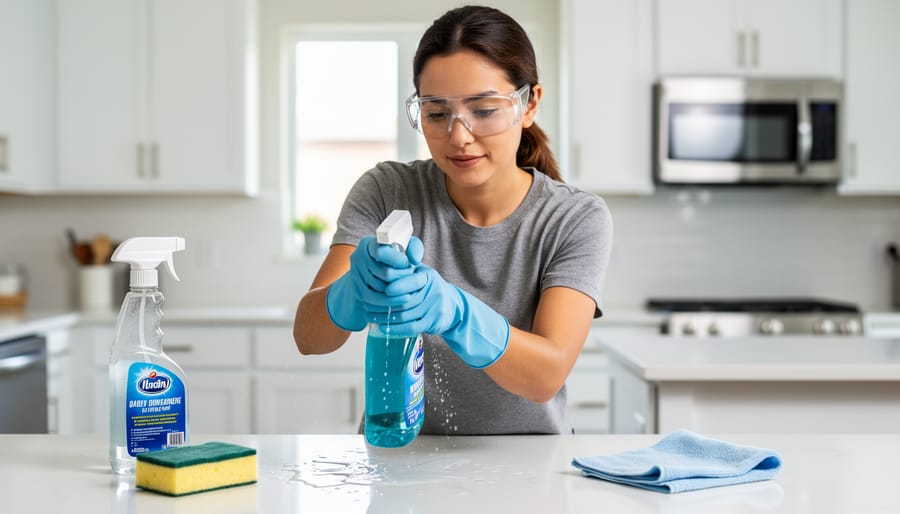
Home projects send more people to the emergency room with eye injuries than most realize. Mowing the lawn launches rocks and debris at speeds exceeding 200 mph. String trimmers fling particles directly at eye level. Drilling, sawing, or grinding wood and metal creates showers of sharp fragments that ricochet unpredictably. Painting or stripping furniture exposes your eyes to solvent splashes that cause chemical burns. Even tasks like hammering nails or pulling weeds with power tools carry real risk. The casual nature of weekend projects makes people complacent, yet the hazards are identical to workplace conditions that mandate protection. Keep safety glasses in your garage, toolbox, and shed. Put them on before pulling the mower’s starter cord or picking up any power tool.
Sports and Recreational Activities
Sports account for more than 40,000 eye injuries each year in the United States, many causing permanent vision damage. Basketball leads all sports for eye injuries, followed by baseball, racquet sports, and hockey. Fast-moving balls, elbows, fingers, and equipment create serious impact risks that regular eyewear cannot withstand.
Racquet sports like racquetball, squash, and tennis require polycarbonate protective eyewear designed to absorb high-velocity impacts. Standard sports goggles with padded frames prevent both direct ball strikes and collisions with opponents. Shooting sports demand ANSI-rated glasses that block ejected shell casings, powder residue, and flying debris. Cycling glasses protect against insects, road debris, and wind-related irritation that can cause crashes. Even recreational activities like paintball and airsoft require full-seal goggles rated for projectile impacts. Choose sport-specific eyewear that meets the American Society for Testing and Materials standards for your activity.
How Safety Glasses Prevent Injury
Safety glasses work through multiple layers of defense, each engineered to counter specific threats to your eyes.
The foundation is impact resistance. Quality safety lenses are designed to withstand high-velocity objects without shattering. When debris strikes the lens, the material absorbs and disperses the force across its surface rather than cracking or sending fragments into your eye. This is fundamentally different from regular eyewear, which can break on impact and become an additional hazard.
Polycarbonate lenses are the workhorse of eye protection. They’re incredibly tough, about 10 times more impact-resistant than standard plastic, yet lightweight enough for all-day wear. This material naturally blocks 99.9% of UV radiation, protecting against both immediate damage from welding arcs or intense sun and long-term conditions like cataracts. Trivex is another excellent option, offering similar impact protection with even better optical clarity and slightly lighter weight, though at a higher cost.
Side shields address a critical vulnerability that standard glasses ignore. Most eye injuries don’t come from straight ahead, they strike from the side. Particles ricochet off surfaces, chemicals splash at angles, and tools kick debris sideways. Side shields create a protective barrier around the peripheral zones, blocking hazards from sneaking past the lens edges.
For chemical work, the design shifts to full enclosure. Goggles seal against your face, preventing liquids from splashing over, under, or around the lenses. The lens material itself resists chemical damage that would fog or degrade regular plastic.
Coatings add functional layers. Anti-scratch treatments extend the lens life in abrasive environments, while anti-fog coatings maintain clear vision in temperature changes or during physical exertion, critical when you need to see clearly while operating machinery or working at heights.
Each feature targets a real threat. Together, they create a shield that keeps your eyes intact when things go wrong.
Types of Safety Eyewear and When to Use Each
Safety eyewear isn’t one-size-fits-all. Different hazards require different levels of protection, and choosing the wrong type leaves you vulnerable. Understanding which eyewear matches your specific risk helps you stay protected without over- or under-equipping.
Standard safety glasses with side shields are your everyday workhorse for impact protection. They look like regular glasses but feature thicker, impact-resistant lenses and wraparound side shields that block debris from entering at angles. These work well for woodworking, construction, lawn mowing, and general shop tasks where flying particles are the main threat. They’re lightweight, comfortable for all-day wear, and meet ANSI Z87.1 basic impact standards.
Safety goggles create a seal around your eyes, offering complete protection from liquids, vapors, and fine dust that can sneak around standard glasses. They’re essential when handling chemicals, working with spray cleaners, grinding metal, or in dusty environments where particles can drift in from any direction. Goggles fit over prescription glasses and typically feature indirect ventilation that prevents fogging while keeping contaminants out.
| Eyewear Type | Protection Level | Best Uses | Key Features |
|---|---|---|---|
| Safety Glasses with Side Shields | Impact from front and sides | Woodworking, construction, yard work, general shop tasks | Lightweight, all-day comfort, wraparound coverage |
| Safety Goggles | Complete seal against liquids, dust, vapors | Chemical handling, spray cleaners, grinding, dusty environments | Forms seal around eyes, fits over glasses, indirect vents |
| Face Shields | Full face protection from splashes and large debris | Cutting, welding, chemical mixing, power washing | Must be worn with safety glasses, protects entire face |
| Prescription Safety Glasses | Vision correction plus impact protection | Extended work requiring clear vision and eye protection | Custom lenses, eliminates over-glasses discomfort, permanent solution |
Face shields provide full-face protection but aren’t standalone eye protection. They guard against large debris, chemical splashes, and sparks during tasks like cutting with power saws, welding, mixing concentrated chemicals, or pressure washing. Always wear safety glasses or goggles underneath a face shield, since the shield alone doesn’t protect against small particles that can ricochet underneath.
Prescription safety glasses solve the problem of wearing goggles over regular glasses. These custom-made glasses incorporate your prescription into impact-resistant lenses with side shields, giving you clear vision and proper protection without the bulk and discomfort of layering eyewear. They’re worth the investment if you regularly work in hazardous environments and need corrective lenses.
Match your eyewear to your worst-case hazard, not your most common one. If there’s any chance of chemical splash, goggles beat glasses every time.
What to Look for When Choosing Safety Glasses
The most important feature on any safety glasses is the ANSI Z87.1 marking, stamped directly on the frame and lenses. This certification confirms the eyewear has passed rigorous impact testing and meets American National Standards Institute requirements for eye protection. Basic impact-rated glasses carry “Z87” markings, while high-impact models display “Z87+”. Don’t buy safety eyewear without this marking, no matter how sturdy it looks or what the seller claims.
Fit matters as much as certification. Safety glasses should sit close to your face without gaps, particularly at the sides and top where debris can enter. The temples should grip securely without pinching, and the nose bridge should distribute weight comfortably for extended wear. Side shields are non-negotiable since most eye injuries come from peripheral hazards. Adjustable nose pads and temple tips help customize the fit, which becomes critical when you’re wearing them for hours.
Lens material determines what threats you’re protected against. Polycarbonate lenses offer excellent impact resistance and block 99.9% of UV rays, making them ideal for most applications. Trivex provides similar protection with even better optical clarity and is lighter for all-day comfort. Standard plastic or glass lenses don’t belong in safety eyewear since they shatter on impact. Match the lens to your hazard: clear for general impact protection, tinted for outdoor work with sun exposure, or specially coated for chemical splash or welding.
Coatings address real-world conditions that make people remove their protection. Anti-fog coating prevents the lens clouding that happens when you’re working hard or moving between temperature extremes. Anti-scratch coating extends the life of your glasses and maintains clear vision. According to optical product testing coatings vary significantly in durability, so investing in quality pays off when you depend on these glasses daily.
Comfort determines whether you’ll actually wear them. Look for lightweight frames, soft rubber contact points, and ventilation that reduces fogging without compromising protection. If the glasses feel cumbersome or uncomfortable during a quick store try-on, they’ll be intolerable after an hour of real work.
Common Questions About Safety Glasses
Can I wear regular glasses instead of safety glasses?
No. Regular prescription glasses don’t meet impact resistance standards and lack side shields to protect from peripheral hazards. Even if the lenses are made of polycarbonate, the frames aren’t designed to withstand impact and can shatter or break, causing additional injury.
Do safety glasses work over prescription glasses?
Over-the-glasses (OTG) safety glasses are specifically designed to fit over prescription eyewear and provide adequate protection. However, prescription safety glasses offer better comfort, visibility, and comprehensive protection since they’re built to safety standards from the ground up.
How often should I replace safety glasses?
Replace them immediately if they’re scratched, cracked, or damaged in any way, as this compromises protection. Even without visible damage, replace safety glasses every two years with regular use, or sooner if the fit becomes loose or uncomfortable.
Are cheap safety glasses effective?
Yes, as long as they’re marked with ANSI Z87.1 certification. Price often reflects comfort features, coating quality, and durability rather than basic protection level. A $5 pair that meets ANSI standards protects as well as a $50 pair for the same hazard type.
When do kids need safety glasses?
Children need safety glasses for the same activities adults do: using tools, doing science experiments, playing certain sports, being near lawn equipment, or watching anyone perform tasks that create flying debris. Youth-sized safety glasses are available and should fit properly to provide full protection.
Do sunglasses count as safety glasses?
Not unless they’re specifically rated for impact protection and marked with ANSI Z87.1. Standard sunglasses, even expensive ones, are designed only for UV protection and will shatter on impact, potentially causing worse injury than wearing nothing at all.
One common mistake people make is assuming that any eyewear provides some protection. Wearing non-rated glasses during hazardous tasks creates a false sense of security while actually increasing risk if the lenses or frames break on impact. The ANSI Z87.1 marking isn’t just bureaucratic paperwork, it confirms the eyewear has passed specific drop-ball tests, high-velocity impact tests, and other standards that regular eyewear never undergoes.
If you’re unsure whether your current eyewear meets safety standards, check the frames and lenses for the Z87 stamp. Without that marking, treat them as regular glasses and get proper protection before starting any task with eye injury risk.
Making Safety Glasses a Habit
The difference between consistent protection and a preventable injury often comes down to accessibility. Keep safety glasses in multiple locations where you need them, workshop, garage, kitchen drawer, garden shed, and car trunk. When eyewear is within arm’s reach, you eliminate the friction that leads to “just this once” shortcuts.
Anchor the habit to the task itself, not to remembering later. Put on safety glasses before you pick up the power tool, not after you’ve already started cutting. This pre-task ritual becomes automatic with repetition, much like preventive eye care measures that protect your vision long-term.
Establish clear household or workplace standards. When everyone in the family knows that mowing the lawn or using the grinder requires glasses, no exceptions, the peer expectation reinforces individual behavior. Start children early with properly fitted eyewear for age-appropriate tasks, riding bikes, helping with yard work, or science experiments. Early adoption builds lifelong habits.
Common excuses crumble under scrutiny. “It’s just a quick job” ignores that most injuries happen during brief, routine tasks. “They’re uncomfortable” means you need better-fitting glasses, not permission to skip them. “I can’t see well through them” indicates dirty or scratched lenses that need replacement.
The inconvenience of wearing safety glasses for two minutes is nothing compared to explaining to your family why you’ll never see clearly again.
Eye injuries happen in an instant, but their effects last a lifetime. A split-second lapse in judgment, a single moment of thinking “it’s just a quick task,” can result in permanent vision loss or blindness. The tragedy is that nearly all serious eye injuries are preventable with proper protection.
Safety glasses cost less than a dinner out, yet they safeguard something irreplaceable: your vision. No amount of medical intervention can restore an eye destroyed by chemical burns, pierced by flying metal, or blinded by UV radiation. Once the damage occurs, it’s permanent.
Take a moment to honestly assess your daily activities. When you use power tools, spray chemicals, trim the lawn, or work in dusty environments, are your eyes truly protected? If not, you’re gambling with your sight.
Make safety glasses as automatic as buckling your seatbelt. Keep pairs where you need them: your workshop, garage, kitchen, and car. Refuse to start any task that poses eye hazards without proper protection. Your future self, with healthy vision intact, will thank you for making this simple commitment today.